Showing posts with label sociology. Show all posts

Wednesday, May 11, 2016

On Fiction, Perspective, and the Culture Wars

I've been thinking a lot lately about fiction, and how we process it.

A couple weeks ago, some friends and I went to see Fiddler on the Roof (absolutely phenomenal, btw). While chatting at intermission, I mocked myself, declaring that I should have counted how many times I cried in that first act. One friend replied, "I know, the wedding was so sad!" 


Oh. Yeah, didn't cry at the wedding, even though, yes, it was very sad. No, what made me tear up was every moment when someone took the risk of being vulnerable to tell someone they love something important, something that would be horrible if that person took it poorly. (And when someone listened to a loved one saying something difficult, good or bad.)

Watched Captain America: Civil War this week (barely spoilers ahead, only for the general conceit of the film). It was a fantastic movie, and I spent most of it not quite tense but distinctly uncomfortable, concerned--convinced--that one of these beloved characters would do something they'd regret and not be able to take back.

Discussed the movie with three friends. #1 discussed scenes, characters, legitimate concerns presented and imperfect ways they could have been dealt with, etc., with great nuance (as per usual). #2 was extremely annoyed at Tony, could conscience no reason whatsoever to be on Team Iron Man; obviously Cap was right, as always. #3 admittedly isn't a big fan of Cap, and found him completely unsympathetic because he went rogue and didn't try to compromise or communicate, didn't at all see that he didn't have the time or opportunity to do much of either.



These latter two conversations have stayed with me, not because they impact how I think of these loved ones, but because they worry me. If we can't "see the other side" in a fictional problem, how can we possibly hope to navigate thorny real-life problems?

There's just about nothing in this world I hate more than the culture wars. They divide us so harshly, we don't even notice that we're demonizing (or at least patronizing) real people on the other side, people who may or may not have seen the same data, but who came to a different conclusion. We see agenda, we see malice, we see stupidity.

Yes, there is some agenda, some malice, some stupidity, always. But most of the time, the people "on the other side" are real people trying to fix legitimate problems, even if their proposed solution seems to cause more problems.

I should have some kind of conclusion here, but I don't. All I have are misgivings. Kyrie, eleison.

Tuesday, February 5, 2013

On Super Bowl Commercials and Sexism

This is not meant to be a full-blown post. Just my two cents on a discussion that, this time, confuses me as much as it frustrates me.

This Audi commercial is one that I enjoyed, though not enough to rank it in my top ten yesterday:


The internets* are all incensed because of this commercial, which is apparently about a high schooler going up to a girl he doesn't know at all and forcing a kiss on her without her consent.

I don't know about you, but that's not the story I saw.

I saw a self-conscious kid who finally got up the guts to announce his feelings to the friend he's had a crush on for months (or years)... a kid to whom his new black eye doesn't matter at all, in the exhilaration of a long-awaited risk finally taken, and in the excited hope that it might have paid off.

And you know what? I'm okay with that message. Sure, I think a kiss is not the ideal way to open such a conversation, but he manned up and made his intentions known, leaving the decision in her hands. Some days, that sounds like a dream come true!

This video leaves a lot to be inferred, much of which reflects more on the viewer than the directors. For those particularly sensitive to misogyny, I can see how this could be upsetting. But I simply cannot believe that their read of the situation is the more plausible one.

*Or at least the corner of the internets that I've been inhabiting lately...

Wednesday, August 22, 2012

Job Searching = Having a Crush on Every Boy

That title either rings true immediately or causes confusion; in either case I'm finding it often brings laughter. Observe.


There are a staggering number of possibilities out there, statistically speaking.

A few of them even seem like they might be a good fit.

So you dress up real pretty (resume/cover letter), and spend a lot of time saying "Hi" and smiling across the room (sending resumes).

Sometimes, you get a "Hi" back (acknowledgment of receipt of resume), and occasionally even a coffee date (interview, perhaps via phone or Skype).

This may even be followed by a dinner date (second or in-person interview), but it's still a little premature to obsess over how you'll respond if he offers you a ring--after all, unlike a conventional proposal, you get a few days to ponder out a job offer, and no one's really that heartbroken if you say no.

 ≠ 

Okay, funny analogy, but so what? Searching for a job, like obsessive crushing, more or less requires the subject to live in a fantasy world that is only tangentially in touch with reality. Because there are so many targets and so few responses, everything changes so quickly; the story is so often completely different in just two days.

That's why so many conversations that are meant to be straightforward and kind are felt like this:

Friend 1: I want to show that I am interested in your life and well-being, so I'll ask how the job search is going, because I know that's a big thing in your life. It's the equivalent of asking "How's work?", right?

Friend 2: OH MY GOSH will people please stop asking me to give them the painfully intimate details of the fundamental uncertainty of my life at the present moment!? I mean, I'm glad you care, but can't we talk about anything else!? (Not that I can think of anything else, as the job search is kind of consuming my life at present... Hmmph.)

Ah, stress.

What's the moral of the story? I'm not really sure it has one. Sometimes the observation of a truth is enough.

Spiritus sapientiae et intellectus, miserere nobis.
Spiritus consilii, fortitudinis, scientiae, et pietatis, miserere nobis.
Spiritus timoris Domini et prudentiae, miserere nobis.

Note: The video whence the title catchphrase originates is entirely superfluous to my point, but for those of you now having Homestar Runner cravings, I've just saved you a Google search.

Sunday, July 29, 2012

On the Heartache Inherent to the Pursuit of Pleasure Alone

I just finished Melinda Selmys' excellent book Sexual Authenticity: An Intimate Reflection on Homosexuality and Catholicism. It's part autobiography, part bridge between gay culture and Catholic culture, helping both to understand the other. I cannot recommend it highly enough.

Selmys makes it clear that beauty and truth are driving forces in her life, and these show clearly in her writing. One passage in particular has stayed with my memory: so hauntingly true, so plaintively evocative...

          Do you think that you know, better than someone who is trying the path of flesh, that its promises are void? That you know better that it is all heartache and failed romance? That you have a keen insight into its existential abysses, lacked by those actually drowning in the darkness?
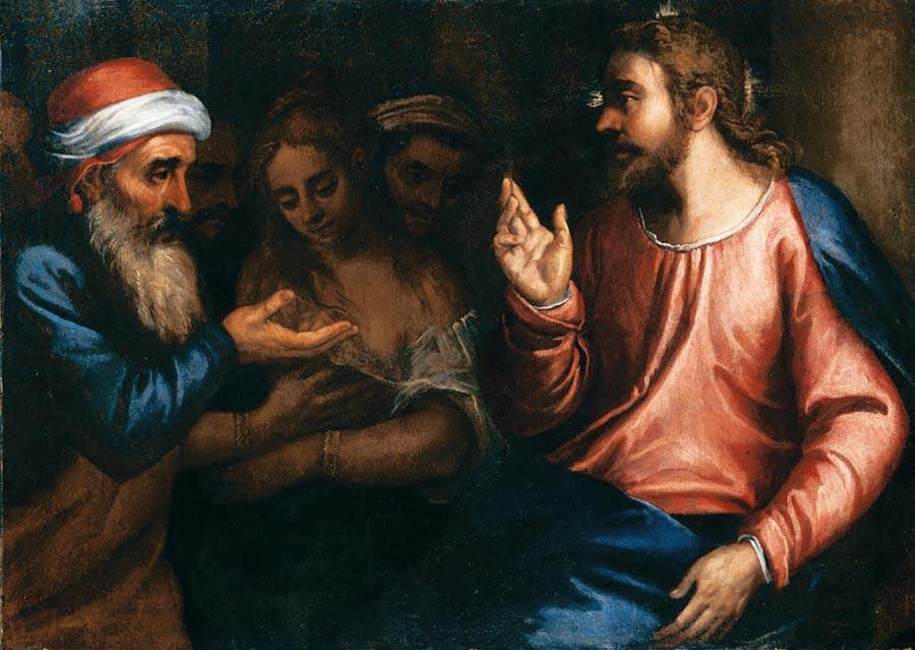
          We needn't squander too much time demonstrating that there is no hope for man in the satisfaction of his impulses and desires. Those who pursue Lady Pleasure as their mistress will find out, sooner or later, that she is a ruthless goddess, a consumer of hearts, who feasts on the carcasses of her faithful and leaves their bones to the dogs. Those who are involved in sexual excesses of any variety -- heterosexual, homosexual, or other -- will eventually discover that they are held hostage in the prisons of their own desires, and that what looks like freedom tastes like death. People who languish in the dungeons of sin know. They know. They are only trying to tell themselves otherwise as a means of keeping sane -- much as a certain kind of prisoner, confined in chains and kept for years from the light of the sun, will slide into a deep and imperturbable fantasy in which the bedbugs do not bite and the whip does not crack. If you feel compelled to rattle someone into a realization that they are sauntering down the wide avenues to hell, concentrate on the complacent, the respectable, the self-satisfied. The sinners -- the public, obvious sinners, the prostitutes, the tax collectors, and the men on Queen Street with the leather thongs -- they know. Christ was always very tender with these people. He saved the epithets and violence for the Pharisees and the moneychangers in the Temple.

Andrea Vincentino, Christ and the Adulteress
Credit: Web Gallery of Art

May we all be a bit more tender with the manifest sinners in our lives. May our love for them draw them to Christ, Who is the only source of healing from the sores left by Lady Pleasure's reign. And may we each embrace His love and forgiveness, and welcome Him to heal the wounds of our own sins.

Propitius esto, parce nobis, Domine.
Propitius esto, exaudi nos, Domine.

Wednesday, November 3, 2010

On Humility in Intercession

We all pray for our loved ones.  It's the most natural response to worry, especially when we're powerless to effect change in their situation that gives us pause.  Too, our first response to a frustrating situation is to ask for the obvious solution:

Dear Lord, please don't let Pat get laid off.
Please heal Sarah from her illness soon.
Please let Phil get into the grad program he so desperately wants to attend.
Please stop Julie's boss from blaming her unreasonably for the department's problems.

But this is not always the most efficacious prayer.  The Lord's ways are much more mysterious than ours; maybe Pat won't meet the person who connects him with his dream job unless he loses his current one.  Maybe Sarah's death will be the catalyst that draws her entire family back to God.  Maybe Phil needs to learn that failure is not the end of the world, and will get a better education at his backup school.  Maybe the extreme humility Julie is forced to learn in the face of injustice will come to play an invaluable role in making her a better mother to the children she will have five years down the road.

It's hard to see those we love suffer.  I gain much consolation these days from meditating on the Sorrowful Mysteries and the Stations of the Cross.  Our Lady was there, following along every step of the way.  She watched her son be wrongly accused, brutally beaten, humiliated in every possible way, and slowly - violently - murdered by the state.

I return frequently to the Fourth Station: Jesus Meets His Mother.  The two of them make eye contact as He's struggling along the road to Calvary.  What did her eyes say to Him?  The most noble and fitting explanation I've ever heard is that her eyes communicated love and encouragement: "You can do it!"  Certainly she shared His pain, and assuredly He knew that.  But to accept that you have to watch someone you love in pain and suffering, even when you know it's for the greater good, is one of the harder crosses to bear.

So lately, I've changed my prayers.  For those who are close to Our Lord, who might listen to Him in the face of crisis, I put aside my own desire for their immediate happiness.  I don't ask for an end to their oppression, just or unjust.  I don't ask for them to receive that which they feel (as do I) is owed to them.  Rather, I swallow my fears and ask for their sanctification in this particular situation.  May Joey's struggles in this class draw him nearer to You. May Harry and Denise's great desire for children in the face of infertility make them holier.  May Terri withstand the awful treatment her mother-in-law is giving her, and may it lead to both their sanctification.

It's a hard prayer, but one that Our Lady keeps reminding me is important.  This life is full of sorrows and suffering, and there really is no easy way out.  The purpose of this life is to draw close to God and to draw others close to Him.

Mater dolorosa, ora pro nobis.
Mater cruci corde affixa, ora pro nobis.

Thursday, January 14, 2010

On Early Marriage - and Early Divorce

This week I learned about the first "Steubenville divorce" of people I knew before they were married.

Now, early marriage can be controversial, insofar as many people think it unwise precisely because it often leads to divorce.  Unfortunately, those figures count "early marriage" as anything from 14 to mid-twenties.  There's a lot of growth in those ten years; those figures are pretty skewed.  (Here is a long but insightful defense of early marriage).

Then, of course, among those who desire an early marriage, there are many for whom that's simply not how the cards play out.  Whether your focus is waiting for the one God has prepared for you or choosing someone based on practical qualities that will make them a good spouse and parent, the fact remains that we can't always get what we want.

Of these who are not able to marry as early as they'd like, there come, of course, the unmarried woes (in women, at least, these often begin in the late twenties; I've no experience of men facing such, though I'd imagine they do): a loneliness mixed with despair at an ever-shrinking pool of applicants (if you will) and fear because of decreasing fertility.

None of these fears justify "settling" in the contemporary mind: tying the knot with someone you don't /really/ love, just to have the security of being married (unless you're open to things like adultery, divorce, etc).  Of course, it is possible to have a good marriage in such a situation, but it requires a lot of self-discipline, and pushing forward just as strongly as if one were "in love with" one's spouse in the first place.  (This is entirely doable, cf. many centuries of arranged marriages, but very foreign to the modern mind.)

I didn't know the couple in question well at all.  I knew her, mostly by association, and I had wondered that she had matured and been tamed so entirely as to be entering into marriage with such fervor and purity as they displayed (as most all engaged couples at Steubenville so piously display).  Trouble is, some people are inspired to virtue by the fact that everyone around them is striving for holiness out there, but others lose discipline because they no longer have to fight for their faith, and still others seem to be completely oblivious to the campus-wide peer pressure to be holy.

So I can't say I'm any more surprised by their divorce than I was by their marriage, especially since I keep hearing that the divorce rate from Steubenville is the same as the divorce rate for the rest of the country (though usually those divorces are blamed on the couple's loss of faith that resulted from the loss of community upon graduation).  And, from what little I know about them, he should have little difficulty obtaining an annulment, and should probably be able to win custody of their child.

But just imagining this poor man, whom I could hardly pick out of a crowd, divorced with a daughter after just two crazy years of marriage...  he can't possibly be older than 27.  I have a hard enough time being single and post-college, and everyone I know has had a hard time making that transition from college to adulthood.  How much more difficult will it be for him!

Please pray all those involved in this sticky situation.  Yet another reason to be careful before settling for someone who may not be motivated to work as hard as you to keep the marriage going.

And another reason to remember that marriages don't make themselves.  Keep in mind, my fellow singles, that life does not actually get easier upon making those vows.  What struggles we have just change.

Sancte Ioseph, ora pro eis
Sancta Maria, ora pro eis
Sancta Familia, orate pro eis

Tuesday, December 29, 2009

On Flirting

They told me the girls complained that I was a big flirt in middle school (said girls, in classic middle school fashion, never told me this themselves).  This upset me at the time.  Why did they think I was a flirt?  Because I was comfortable hanging out with the guys and I laughed at their jokes?  News flash: I thought their jokes were funny!  I was /not/ being a big flirt!  (Anachronistic observation: Sure, I wore quite the booty shorts, but that was for fashion and for fun, and was never intended to land me a man.)

My whole extended family functions by way of humor.  Somebody's the straight man (usually me), somebody's got the witty retort or the hilarious story (never me, save in extra-familial situations), and everybody's the audience.  My parents have always communicated via witty banter exchanged across the kitchen or over the dinner table.  One of my earliest childhood memories is of desiring such a banterability with the man I would one day marry.

But this enjoyment of humor (and especially of banter) was not limited to romantic situations, not by far.  I have bonded with many a friend over the years (both guys and gals) with such verbal interplay as could (I suppose) be considered flirting.  But flirting seems to contain an essential element of showing off, an interior risk or danger, which has rarely been part of the situation for me.

This is not just a tension between my family and the rest of the world, though.  In my secular office back home, wordplay and banter are absolutely essential to the friendly, fun office dynamic.  I take this as a confirmation that it's not just the quirks of my family or the insularity that can afflict Steubenville circles but a reality of life that people banter and are funny, and this is good.

So why is it that women still get accused of being flirtatious for such things?  Double standards?  Jealousy?  Certainly misperceptions, but is there more to it than that?

Let me know if I've missed anything.  In the meantime, I've got some co-workers to banter with.


Thursday, December 24, 2009

On Christmas in Advent


When I was packing to return to school after Thanksgiving, I debated whether to bring back my Christmas decorations et cetera.  The deciding factor was the thought: I'm studying at the Liturgical Institute.  If we celebrate Christmas in Advent, there's something wrong with us!  And so I left it all at home.

The celebration of Christmas in Advent has always been a question I've debated.  Certainly it is better liturgically to celebrate Christmas, well, during Christmas!  Yet it does seem a bit excessive not to celebrate it at all during Advent, when the rest of the world is celebrating, especially since Advent is a season of preparation for Christmas - in joyful expectation more so than in sorrowful penitence.

A few groups of which I've been part throughout my life have celebrated Christmas after the holiday break (from work or school), but the vast majority of even Catholic groups celebrate before the holiday.  After spending this Advent almost completely out of touch with any holiday celebrations, I'm beginning to think this is more than just conforming to the secular holiday culture.

First problem: This Advent has not felt like Advent.  Sure, I've been doing the Jesse Tree on my own, and we've been praying Lauds and Vespers in common, and I've gone out of my way to wear the appropriate liturgical color each Sunday (epic win!), but it simply hasn't felt like Advent.  My Christmas shopping has been done gradually.  I've only listened to Christmas music on occasion (in an effort to keep myself from getting sick of it before Christmas came).  I've done no decorating.  My Christmas cards are not yet written (because I don't want them to arrive in Advent).  And I've been to a grand total of two parties.  It does not feel like we are approaching Christmas.

Second problem: I'm focused on Advent-not-Christmas.  As a result, I've been hesitant to wish people a Merry Christmas - whether they're people I know and see regularly or total strangers at the mall - which does little to support the celebration of Christmas or put anyone in a Christmas mood.  Even upon leaving school for the break, I felt no compunction about wishing people a happy new year, but had to force myself to say "Merry Christmas!"

Third problem: It's perfectly natural to meet and greet and wish people well in the weeks before Christmas.  There are some people with whom you'll part ways before the holidays, and others whom you won't see until the holidays; in both cases one wants to celebrate with such people and wish them the best.  The weeks leading up to Christmas are a perfectly natural time in which to reminisce and celebrate with those people who are close to your heart but are not the family with whom you spend the feast day itself.

Fourth problem: We have a hard time celebrating things for a long time.  I don't know how much of this is innate to the human psyche as opposed to twenty-first century American culture, but anticipation builds toward a major event and then dies down much more slowly.  That is to say: it seems to be easier to celebrate "Christ is coming!" for the whole month of December than to celebrate "Christ is here!" for the whole month of January.  Certainly this is aided by the fact that our society plays Christmas music and displays Christmas decorations on that time schedule, but I wonder whether this is something deeper than a societal disorder...

* * *

It's now Christmas Eve (I wrote most of the above yesterday).  After watching Christmas movies with my friends and sister (four in the past twelve hours), wrapping Christmas presents, and eating Christmas Eve dinner with my family, I am beginning to feel like it's time for Our Lord to be born.  Advent still felt too brief, but the calendar marches inexorably on, and the holidays come anyway.  I suppose my challenge now is to live out the other side of the coin: to keep the Christmas spirit even after the octave has ended. 

Puer natus est nobis, et filius datus est nobis . . . Cantate Domino canticum novum quia mirabilia fecit!

Monday, November 9, 2009

On Provocative Language in Everyday Use

As I believe I've alluded to before, this campus is over 90% male. This means that at nearly every meal I eat, I am the only woman present at the table. It's an interesting dynamic; I am the honored guest as often as I'm the fly on the wall.

There have been moments like when those generous men gave up (or at least delayed) their sports talk time and asked me about my local sports teams, diverting the center of attention to me, because they'd noticed I had nothing to contribute to the sports talk. On the other hand, there have been a number of moments when unflappable Claire was a just little bit surprised that they really just said /that/ so unabashedly, with a woman sitting right next to them.

The men here (the seminarians, the priests, and the few who are neither) are very conscientious to bid adieu to "Gentlemen" and to "Claire". If they refer to a group of which I am part as "guys", they are always quick to apologize and restate with a more gender-neutral term.

On the other hand, when vulgar language is used, there is almost never an apology nodded to me, the woman who has to sit through this (even my secular office accorded me that courtesy).

I am an educated woman, with a background in foreign languages and in Catholic tradition. I understand that a mixed group is referred to by the masculine plural. As a personal stylistic choice, I actually prefer "brethren"!

I have no opposition to vulgar language, especially when used appropriately. But I like to think of myself as a lady. I intentionally refrain from using such words for propriety's sake.

It's not that I'm upset or offended. And it's not everyone here who does this; these are just general trends I've noticed at random meals. But it does make me wonder:

When did feminist egalitarianism replace common decency as the most important sensibility to avoid offending at all costs? And what can I do to help switch it back again?

Saturday, October 31, 2009

On Brains and Career Choices

Two good friends of mine have surprised in recent months me by asserting quite forcefully that I am smarter than they are.  It's not that I disagree with the assessment; it's more that I'm bewildered by how they came up with enough data to make such a claim (in both cases, I feel quite certain that I lack the evidence necessary to evaluate such a claim).

Out here, too, I am widely regarded as being very bright.  Now, I'm accustomed to being regarded as being highly competent, because good, efficient work speaks for itself.  But I've not been here very long, and I don't feel that my brain muscles have been stretched in a way that would be observable to others. It's not like I've been the center of attention (well, perhaps my fashion, but much less my conversation),  and I haven't been around for many intellectual discussions (I'm quieter out here than you'd probably expect).

Don't get me wrong; I know I'm clearly an intellectual, and that does come across to people (hence why most of my friends from Spirit and Truth expect me to write a book someday).  What really baffles me is how other intellectual friends can so easily assign me a slot above them in that great mental hierarchy of intelligence.  (Not that I don't mark out other friends as geniuses myself, but that's usually only after I've had some sort of intellectual background with them...)

But let's take this supposition and run with it.  So I'm smart.  Smarter than most people.  (Certainly logical thinking is a good beginning that's lacked by most Americans.)  I realized tonight that perhaps my own intelligence is the trap behind my unfortunate Jansenistic tendency of separating my faith from others' reason.

See, I know that faith is reasonable, especially ours (well, to a point, anyway).  And I've heard all the philosophical arguments for faith; they all make sense, but I find none of them to be quite compelling enough.  So I don't get into philosophical arguments about religion, unless it's with people who are coming from the same philosophical playing field as I'm on.

So I've learned, over time, to explain my education and life plans in such a way that they make sense and sound reasonable and nonthreatening (if a bit bizarre) to religiously apathetic people.  My passion remains invisible (though implied), but I'm okay with that; sometimes that's how it's gotta be.

Well. Tonight I was in a social situation with mostly areligious peers, strangers.  So naturally, the first conversation opener is to ask about work or school, and I run through my usual spiel, receiving the usual polite-but-not-particularly-interested responses.

And then it hit me: My intellectual gifts are near-completely hidden in such a situation.  Sure, my social competencies play out nicely, but these people first meeting me will likely place me in a mental bin with people of lesser intelligence than they have, simply because I value religion.

Perhaps that's why I feel like universalizing my life's ambitions is just dumbing them down: because speaking in such a way fails to bear witness to the glorious reasonability of our faith.  And that reasonability so desperately needs to be borne witness to.

And maybe it's just the nonconfrontational people-pleaser in me that only wants to engage with those people who positively want to have religious discussions.  But you attract more flies with honey than with vinegar.  And while you might have fewer buyers at first if you leave the honey loose, it'll last longer and be better kept if you seal it in a jar and open it only at the appropriate time.

Peddling honey is somebody's role.  I just think mine is more like serving tea and waiting for my guests to ask for it.
 

And yes, Luke, I did title this post just for you.

Saturday, October 10, 2009

On Slowing Down, and Being


Sometimes it takes a visitor for you to realize what a new place has taught you.

This weekend, Greg came to visit.  We pretty much did the same things I'd normally do anyway, except that the homework bits were replaced by the two of us chatting.  As we took a leisurely drive around the lake this morning, Greg commented that, "It's so weird not to be doing fifty things at once."  And I realized: I've become used to that, to whatever is the opposite of multitasking (unitasking?).  But let me back up.


For meals here on campus, they only serve at certain times, and for only so long.  So the whole campus eats lunch at 12, for instance.  Because of this, it's standard procedure (and only polite) to remain at your table until everyone who's seated there - including those who arrived as you were finishing your food - has finished both eating and talking.  If you have a particular reason why you need to go, that's not held against you, but the primary time of socialization here is over meals, so you just budget an hour for lunch and chat with who you sit with.


Even the campus itself invites you to slow down.  The speed limit here is 25, but every time I glance at my speedometer, I'm barely hitting 15.  There's just this serene feeling of being in nature (on nature's turf, if you will), such that you want to slow your car down to be as inconspicuous as possible.  The focus is not on where you're going to end up but on the journey, on the beauty you're in the midst of as you go.


Too, there aren't a million social activities here like there are at undergraduate colleges.  This place is just a grad school and a seminary, nothing else.  So while there are things to do and people to see... let's just say I don't think I've had so few extracurricular activities in my schedule since middle school.  Not to suggest that I'm not doing anything - I work, and I go to class, and I catch up with friends via the phone, and I do research, and I pray, and I eat, and I sleep - but only that I spend larger chunks of time doing fewer things.


I suppose I'm learning about small town life, in a way.  Not to suggest that ours is a self-contained community, but that it is small, intimate, and slower-paced. And I've always had a hard time with not-fast-paced.  I do, I suppose, expect that others who come to visit are looking for something to do, which we don't really have.


You don't come here to do; you come here to be.  It's a distinction I often forget.  Hopefully two years here will enable me to internalize this enough that I can live it even in the midst of Big City life.

Wednesday, October 7, 2009

On Names

They told us in theology classes years ago that, in the Hebrew tradition, names are a big deal. That God renaming Abram Abraham was significantly more than just a nickname. That God's revelation of His Name to the Chosen People through Moses marked a covenental intimacy that no other people had with their God. That even still, when one writes the Name of God in the original Hebrew, he is required to break the pen (or whatever writing implement) he used, because it has written the greatest thing it is possible to write. That at the Name of Jesus, every knee must bow.

But names still never seemed like anything to write home about, other than these sacred Names. Making connections at a new place here has reminded me how normal it is to name-drop - not even to impress people, but just to find common ground, whether it's people you personally know or perhaps those with a bit more notoriety that you mutually follow. I'm sure my fellow Steubie grads who read this are well aware of the moment when you introduce yourself and identify your background, and the Catholic you're talking to immediately throws out names of others who attended our school. It's just a natural way to put ourselves at ease with others.

So when I'm now meeting awesome people who are headed to my alma mater, I think nothing of telling them to send my best to those people still there whom I most treasure and/or whom they're likely to meet.

There is one particular professor whose class I recommend as worth nearly as much as the entire rest of one's education there; naturally, I tell these new student friends of mine to seek him out and take his class at all costs. Turns out at least one of these friends made it in to his already overfilled class specifically because he told this prof that I told him he had to take the class.

That brought it home: My name is important. Perhaps that's just me developing notoriety, but it was a strange feeling, to know that my name alone - not my presence, my email, or anything else I directly did, but just my name - was enough to influence such a decision.

Growing up, I always called the Mother of God simply "Mary." That was her name, so that's what I called her. When I began to meet other Catholics my age who practiced their faith, I noticed that most of them called her the Blessed Mother. As I grew to learn bits and pieces of other languages, I saw that in Polish, she is usually called Mother of God; in French and Spanish, Our Lady. Whenever a Marian priest said Mass, his homily always tied in Our Lady.

My point? After a time, it became clear to me that those people with great devotion to the Immaculate Virgin called her by different titles, and almost never by her name. So I intentionally switched from referring to her as Mary to our Blessed Mother. As time continued, I found myself desiring a deeper love for Our Lord's Mother, so I thought I'd do what everyone I know with strong Marian devotion does: intentionally refer to her as Our Lady.

And, wouldn't you know it, my love for her has soared. And all I've done differently is change how I refer to her. Not even how I address her; that's the same as it's been since childhood. Just calling her "Our Lady."

Because of which, I've unconsciously begun to refer to Jesus as "Our Lord," rather than simply as Christ. It's a title that radiates both loving affection and submissive intimacy. And I love it.

I pray that Our Lord bless you and Our Lady watch over you and all those whom you hold in your heart.

Monday, September 7, 2009

On Transitions

Note: Though I rarely break the fourth wall (save in the combox), I apologize for the interruption in my posts.  Moving halfway across the country will do that to a gal.  I hope to be more faithful to writing here during my graduate studies.)

I have always been a very adaptable person; I acclimate to new situations without much difficulty.  But I have noticed that in recent years, my transitions have become more difficult.

Perhaps it's because more of my heart remains with the community I've left behind.  Certainly I've made more and deeper friends over the years, whom I dearly miss.  But I was pretty darn connected to my high school friends when I started college, and that didn't stop me from meeting a zillion exciting people and diving headfirst into college life.

No, no more perhaps.  I know exactly what is going on.  As I have grown closer to Our Lord, and He has shown me more both of Himself and of myself, it has become more difficult to give myself to others precisely because there's so much more of me to give.  How can I communicate to another the incredible depth of my being?

Consider this stark contrast: Here I am awkwardly making smalltalk with priests and seminarians I hardly know, largely in order to pleasantly pass the time.  But just a few days ago, I roamed this beautiful campus in near-silence with a friend so dear to my heart that words were unnecessary to express the depth of God's glory that we were experiencing in tandem.

Transitions are hard because they're lonely.  I am lonely because I know myself, and long to give of myself on a deep level.  I know myself because Our Lord has revealed myself to me.  I know Our Lord only through His gracious mercy, and as that knowledge increases, so does each transition become more of a challenge.

So the solution to a tough transition would seem to be: Remain centered upon Our Lord.  Everything else may change and pass away, but He alone will remain.

I love You, O Lord, my strength.

Monday, August 10, 2009

On the Danger of Knowing a Little Psychology

One of the classes that was required for my undergrad was Philosophy of the Human Person.  I took this entry-level class as a senior with a good background in philosophy, so I wasn't particularly bowled over by any major revelations in the class, but the one thing that did stick with me was the distinction between self-presence and self-reflection.

Bear with me, you non-philosophers.  Self-presence is just living your life; self-reflection is being aware of the fact that you're living your life (and of how you're living it).  For instance: Picture yourself at a funeral home, alone in the viewing room with your deceased love one, just grieving.  That's self-presence.  Now imagine that someone walks in the room.  You are instantly aware of how you appear and sound, and (unless you have an enormous amount of self-confidence) probably interrupt your grieving because you are aware of being observed.  That's self-reflection.

So I tend to be somewhat psychologically oriented.  This is great, because Our Lord can point out to me that I suffer from this terribly silly insecurity that I'm an overbearing personality (a total lie), and I can look critically at my friendships to see that this is far from the case.  He can also suggest that I need to let Him increase a particular virtue in me, and I do so easily because I'm so aware of myself.

On the other hand: it often makes life more difficult.  When with a group of men, for instance, I usually have to fight the fear that I'm infringing upon guy time, which makes it much more difficult to just relax and enjoy myself / be able to give myself more freely to others.  When I'm not going through a particular crisis or growing period, I begin to ask God what He wants to fix in me next, as if it's all about Him improving me (whereas it's really about Him loving others through me).

Don't get me wrong: self-reflection is important and helpful and all that.  But it's like being that kid from the Wonder Years and always narrating your life.  Sure, it's funny.  But are you really living life to the fullest?  Are you really able to truly be there for the friend crying on your shoulder if you're thinking about the fact that she's crying on your shoulder (as opposed to listening wholeheartedly to her story that is the reason for her tears in the first place)...

For those of us who routinely first examine our motives to be sure we're not manipulating or using others, it's a tough job to trust ourselves to not screw up God working in us, and to just be present to those around us and to what's going on.  Like most things in life, however, difficult only really means entirely worthwhile.

* * *

Special thanks to Emmy for awarding me the Anti-Muffin Award in the sidebar to the left!  Reading her blog and corresponding occasionally with her has made me feel like I've made a new friend, which is a really novel and awesomely cool feeling.  :D

Friday, July 31, 2009

On Angst and Truth

I recently confessed to Isaac* that I wrote some angsty fiction in high school.  While he laughed (with an appropriate degree of loving mockery), I came to realize that beneath most angst there is truth.

Certainly my angsty writing (this one example is humiliating enough) got at a deeper truth, something that I felt wasn't known in the world at large.  You know how, in high school, your closeness with your friends is such that their problems become your problems, too?  This was a case of learning something from my friends with initial shock, but then wanting to spread the knowledge once the shock faded away.

And realizing that my writing of angsty fiction was coupled with my desire to make people understand the truth makes me feel a little bit less sheepish for writing complain-y rants like that.  But just a tiny bit.  It is, after all, angsty fiction.

At least I never wrote fanfiction.


*I know I have a bad habit of name-dropping just so I can link to my friends' websites and blogs.  I still haven't yet gotten over the novelty of my friends having websites and blogs to link to, and it's fun, so cut me some slack, okay?

Thursday, July 16, 2009

On Stalker Phobia, and Receiving Love

The other night, Isaac pointed out that so many of us in this day and age have a "stalker phobia", if you will - an overexaggerated fear that other people are paying too much attention to them. His example was that if he were to mention to a casual friend that he was browsing through their facebook pictures, their first reaction would probably be to pull away, almost as if they felt violated!
But as even this story illustrates, we are also fickle exhibitionists. A simple search by my name can easily direct you to my blog, facebook, MySpace, LinkedIn, and umpteen other pages that put my information and my personality directly on the web - not counting the various xangas, livejournals, and other accounts I've deleted since high school - and I'm not even trying to promote myself on the web!

My Christian Marriage professor taught us that love is based in knowledge. This was revolutionary to me at the time, but seems more fundamental the more I consider it: the more you know someone, the more you can love them, and the better you can love them. We all desire to love and to be loved; when we invite others in to the mystery that is each one of us, we are inviting them to deeper knowledge of ourselves, for better or worse.

If you draw people in and invite them to know and love you, you may be perceived as desperate or pathetic. But if you genuinely pay attention to others and love them by knowing them, you run the risk of being perceived as a stalker, someone who's unpleasant and even dangerous.

Why is it such a risk to reach out and love someone? Why is it scary for me to admit that I remember your birthday? I know that I feel special when people remember my birthday without the help of facebook. So what's the difference?

Perhaps it has to do with our view of love. I think one could make an argument that the dominant American culture's view of love is rather similar to its view of life: that is, if an unborn child is wanted, its mother is praised and protected and cared for with great affection; if the child is unwanted, however, it's an unfortunate circumstance that is best simply taken care of. Similarly, if love is felt by both parties, they should be able to marry and do whatever they want, but if the love is unrequited, it's a terrible shame and the lover is pathetic and needs to get over himself.

In past ages, much emphasis was put upon unrequited or unattainable love - arguably too much (though I suspect Joe may disagree). Perhaps one can blame Bacon and the empiricists for putting rationality into science's hands and, in the long run, orienting our whole society toward valuing the factual and the practical over the abstract and the emotional.

Having recently gotten over a situation in which I was head over heels in unrequited love for two years, I can appreciate thoroughly the pros and cons of such a thing. I used to think, as does the prevailing culture, that the best thing to do in such a case is to just get over yourself and move on with life. But I found myself unable to do this, so I embraced the feelings, and learned some very valuable lessons. Most pertinent now: love is a risk, and truly loving someone is always worth that risk. It is often painful, but true, selfless love is one of the most real experiences a person can have, and one of the best ways to understand God's love for us.

Yet love is based in knowledge. Every kind of love, that is (not just eros). Those of us who are detail-oriented with a good memory can easily flatter or scare casual friends with our recollection of minute details about their lives, and it is a relief to us when we realize that we've found another who will accept our quirks, including our minutiae, without feeling threatened and running away.

Yet here I find a point I missed earlier - why do we feel a need to run away? Is loving pursuit so terrible? Is receiving love so hard? (Admittedly, sometimes it is.) Or have we all been so hardened by sin (original or personal) that we expect people to use us before we expect them to love us? Love is a tender emotion, and vulnerability an important factor toward increasing love. True, we oughtn't be so vulnerable to everyone all the time, but we should let the Lord push us out of our familiar little box every now and again.

I challenge you to go out of your comfort zone sometime in the coming week and show someone (probably someone other than your beloved) that you love them in a way that's a little bit scary. Too, pay attention to how well you receive unexpectedly personal moments of affection, and try to be as open to them as you can. I pray the Lord to bless these endeavors, that they may be a vehicle of great grace to you as they have been to me.

Tuesday, June 23, 2009

On Reverse Racism and Wishful Thinking, or On Being White

When I was a little girl, I used to pretend I wasn't white.  Did any of the rest of you do that?  My name was Gabriella Romero, I was Hispanic (not from a particular country; I was just Hispanic), and my hair looked like this. Sure, I was probably influenced by Sesame Street, Ghostwriter, and other such shows that made a point of racial/ethnic diversity.  But even more than that was my firsthand experience of tightly knit families with a strong cultural identity.

According to Wikipedia (which quotes the US Census Bureau), my hometown is made up of approximately 25% White, 23% Hispanic/Latino, 20% Indian (from India), 10% African American, 8% Asian, and 14% Misc/Other.  So it's no surprise that my grammar school graduating class of 24 had about even numbers of Puerto Rican, Punjabi Indian, Filipino, with maybe twice as many whites as any one other group.  My best friend from the middle school years, Shevy, is so Indian that in her extended family, only the kids speak English or wear street clothes in the house (and even then, only sometimes).  When Alyssa first came over from the Philippines at age four, she and I became friends despite the language barrier, so thoroughly that our immediate families come to each other's extended family gatherings.  Distant Filipino "relatives" I don't even recognize (and I have a pretty good memory for faces) have come up to me and said, "Hi, Claire, how are you? How's college in Ohio? You're almost done, right?" (Note that this is the only English they'd speak at a given party).

Many of the friends I made at youth group were Hispanic (let's be honest: most of the friends I made at youth group were Boriqua!), which just showed me another side of what I was missing.  My high school had a large Haitian population, and I received what I felt were high compliments when these girls welcomed me as one of their own.  In short: I lived in the thick of the racial/ethnic melting pot, and I loved every second of it!

Enter college.  I don't know the exact statistics for my alma mater, but I think it's safe to say that the campus is at least 85% white (and that's being generous to the minorities).  I learned that diversity doesn't have to mean that you're not white, and found out quite a lot about ways of life in different parts of the United States.  But I was still aware of how ridiculously, unrealistically white our campus was.

It's not that I spend a lot of time in ethnically diverse communities anymore, even though I'm back home where such communities exist.  Part of my desire for a cultural identity has been met in my discovery of Catholic culture, something that has belonged to me all along.  It helps, too, that I now know how to cook a few signature Polish dishes, so I feel like I at least have that going for me.

But I'm still white.  There is a satirical blog called Stuff White People Like.  It is absolutely hilarious, well-written, and remarkably accurate.  And I cannot read it.  It makes me downright uncomfortable with being white.  I have actually caught myself trying to change who I naturally am because it fits into the stereotype so effectively mocked on that site.  A few weeks ago, when I was in LA, I found myself very irked by the system of "White Points" that Aaron applied to things (e.g., shopping at Trader Joe's, buying organic), though his comments were very funny and were appreciated by all around us.

Which brings me to a realization: Some part of me, deep down, is actually uncomfortable with the fact that I'm white!  On one level, I relish my whiteness.  I know intellectually that I have it easy because racism won't really ever be a factor in my life.  I also thoroughly enjoy European things - cultures, food, languages, their whole way of life.  And a lot of the stereotypically white activities are things that I /do/ really enjoy.  Heck, I'm more attracted to white men.  But on the other hand, there is a beauty and a mystery and a coolness that comes with being, well, not white, that I will never know.  Perhaps it's just the allure of the exotic.  But whatever it is, I need to let it go.  Because I am white, and I always will be white.  And it's about time I got over it.

EDIT: I have learned that reverse racism is quite a bit more ridiculous than what I've described, but I'm not changing the URL.

Monday, June 8, 2009

On Dancing

My first dance was our eighth grade graduation dance (remember: in 8th grade, I thought I was ghetto, and so did just about everyone around me, though most of them were actually more ghetto than I). I'd never danced before save for line dances at parties and pretending to be a nightclub singer in the privacy of my room.  A few songs into the dance, my Indian best friend came over to me and said, "Claire.  Stop.  Like this."  My first dance lesson.

High school had dances, too, but it was also high school, so the sensuality and laziness of the bump and grind method, compounded by the fact that I didn't know anyone who danced to anything other than hip-hop (or sometimes techno, but techno was never my scene) and my inability to do the "I'm a white person who can't dance so I'll do dumb funny things like the Shopping Cart and the Lawn Mower" dance moves (for the record: I love these dances and am somewhat jealous of those of you who pull them off so well)...  that was a long clause.  What I'm trying to say is that I enjoyed dancing, but I mostly danced because that's what you were supposed to do at dances and it was fun, but that was about that.

Enter college, and swing dancing.  At this point I'd had one (long and painful) dance lesson with Dad on vacation, in which the only thing I learned was how to stop trying to lead and just follow the man - which is assuredly the most important dance skill I've ever learned.  My unproved belief that I was a good dancer was here tested for the first time, as I swing danced with many guys of varying skill levels without ever being completely bewildered.

In college also entered the charismatic renewal, which (among many other things) brought the concept of praise dancing - that is, of worshipping the Lord by dancing (to, say, praise and worship music) in addition to or in place of singing.  The pertinent detail here is that dancing became an activity not just of good, clean fun but of using my body to praise the Lord.  There's only so much variety in different types of dancing, so soon all dancing I did felt like praise in its own way.

Back to swing and (occasionally) salsa dancing.  I came quickly to see how these types of partner dancing were an excellent analogy for the spiritual journey.  Let me explain.  My job as the woman in these dancing situations is to follow the man, to do what he tells me to do even though he doesn't use his voice to communicate (I once heard it described as being a rag doll, in a non-derogatory sense).  One of the most exhilarating feelings is always when my mind has no idea what my dance partner just signaled me to do, but by the time I finish thinking that I realize that my body has already done it.  So docility to the Holy Spirit can be easily likened to a dance, since we're all feminine in relation to God.

Now that I'm back home, I've found bar that does salsa lessons and dancing weekly, and have convinced some friends to go with me regularly, so the presence of God is frequently on my mind as I exercise my body.  My attendance at a Filipino-Puerto Rican wedding yesterday only added to the feelings of joy that come with such dance.  Each dance was exhilarating partly because of the dance itself, but even more so because of the love I bore for my dance partner and all those dancing around me.

One final thought: this wedding was on Trinity Sunday, and the priest's homily compared the spiritual life to dancing, but in a different way.  The love of the Holy Trinity is the dance, and the Father sent the Son to us so that He could teach us the steps (as slowly and painstakingly as we might need).  I think the Holy Spirit is what enabled us to keep the steps?  That part's fuzzy.

My point: Dancing as metaphor for the spiritual life.  Think about it.  I like it.  :)

Note: Posted from Seattle, WA, from the offices of My Catholic Faith.  You should check them out, 'cuz they're cool.  And Dr. Curran gave me a free copy of his really cool-looking book on the Mass.  And I'm not saying that just 'cuz he gave it to me for free.  :)

Friday, June 5, 2009

Rant on Homo-judgementalism

Unless you're in those circles that are drawn together precisely because of these issues, anything related to homosexuality is pretty much taboo.  If it NEEDS to be mentioned in a given setting for some reason, it might be glossed over briefly before being left behind in relief.

Why is it that so many of us are so terrified to be perceived as condoning another's public sin?  One dear friend always used to say that he was a much worse person than all these who were publicly living in sin, in reference to his pride and judgement and other interior vices, for which he was so much more responsible. The epic poet Dante would agree. He placed fornicators (including, I would presume, sodomites) in the ninth circle of his hell, the least painful part.  Their sin is so much lesser...

Heck, I would say that even St Augustine would agree.  "Love, and do as thou wilt," was how he summed up the law.  In that order - love first, and /then/ do other things, because when one loves first, everything else will fall in line.

But we're afraid.  I think part of it is that those of us who are theologically orthodox have been so scarred by our more progressive brethren that we're offended to be clumped in with them, afraid to come across as like them.  In an effort to avoid compromising ourselves, we project our prejudices and make our voices known.  And sometimes it is important for our voices to be heard.

But we can't be in ministry mode all the time.  Sometimes, we have to just accept people where they're at.  Is a man living with another man really all that different from a man living with another woman?  If someone is living in some other sinful way, do we feel morally obligated to make it known that their sin discomforts us?  Usually not.

Another college friend was discussing with me tonight two mutual friends who have quite flamboyantly come out of the closet since their graduations a few years ago, and how these men just felt so alone, so shamed into themselves on our conservative Catholic campus.  Sure, it's great that most people around you are striving for holiness with all their being, but how can you strive for holiness if you're barred from ministry positions because an adult you trusted spilled the beans that you struggle with homosexual temptations?  That's a far cry from blatantly living a lifestyle at odds with Church teaching, and yet it's often treated the same way.  Who can blame people with such temptations for holding them in and then exploding once they were allowed to let out that forbidden breath?

In the end, we straight folks fall into the same pernicious trap that ensnares anyone who's faced homosexuality in their own life: placing so much emphasis on the homosexuality that it overshadows absolutely everything else about a person.  It's uncomfortable, but you can live in harmony with those with whom you disagree on important things.  Get used to it and get over it.

That nun.  She really does have it right.  I respect her a lot, and I hope to one day achieve a balance like what she has.  May the Lord bless her, her cousin, all people anywhere on the LGBTQA continuum who feel rejected by Holy Mother Church, and all those in the Church (myself included) who reject them, from time to time).

None of us dare to even hope for heaven save for God's great mercy.  And if it's mercy that brings up both the biggest sinners and the dearest saints, who are we to judge who neeeds His mercy/

Tuesday, May 26, 2009

On Chivalry, Romance, and the Occasional Date

Last weekend I went on a date for the first time in over two years.  Not an "ooo la la!" date with romantic potential, but a young gentleman friend needed an escort to a particular event, so I accompanied him.  I expected nothing other than the natural high of dancing the night away.

Keep in mind that I have (and have always had) many guy friends.  I have become quite accustomed to one-on-one hangouts that are fun but very boundary-conscious.  Safe chivalry, if you will.

On the other side of the coin go my many experiences of being hit on, mediated somewhat by salsa dancing.  Though my distrust of strange men is imediate and my reaction one of caution, I have learned that some unknown men really don't want to use me for their own twisted pleasures, but want simply to have the pleasure of my company for a dance, much like the occasional stranger who walks up to me, tells me I'm beautiful, smiles, and wishes me a pleasant day.

Back to the evening at hand.  Desensitized by four years at Steubenville, I had nearly forgotten:  Chivalry is inherently romantic (which should be obvious, considering its origins)!  Though I was accustomed to walking through open doors and was pleased by his constant presence by my side, I had to stop myself from telling him it was really too much as he went out of his way to bring me drinks and pulled out my chair before each time I sat down.  I had to fight a learned response of physically tensing up when, upon the first slow song, he pulled me closer than I'd expected.  Boundaries! You're not dating! screamed a voice in my head.  But a more reasonable voice reminded me that, though this was unexpectedly close, it was not inappropriately close.  I was, after all, his date for the evening, and there are romantic connotations to that.

The understanding between us was absolute; he was not trying to pull a move on me.  So why did I have to fight myself to remain calm and enjoy his taking the lead and guiding things, as he did consistently (and excellently) all evening?  Why am I always so overly concerned about maintaining proper boundaries between friends?

I don't have a nice tying-things-together paragraph to end things.  I'm still trying to figure this one out myself.  Thoughts?
Related Posts Plugin for WordPress, Blogger...