Hello again, blog! It's been a long while, despite my earlier resolution to return regularly. Ah, well! I am content with blogging whenever the mood strikes me, and it has struck me today. I wish to do a year in review of my personal/interior life in 2016 this morning, with the help of my calendar. Let's see what we've got!
JANUARY
I started the year with some really excellent fiction! I discovered both
Robin McKinley and
Chris Fox in January, whose books I will now buy just because I come across them, because I know I'll enjoy them someday. I also decided to gamble on Eve Tushnet's novel
Amends (knowing only her nonfiction), which I not only tore through but which has stayed with me all year. I'm seriously considering a reread already. AND I discovered the
Expanse series in January! Holy cow. Talk about can't-put-it-down sci-fi adventures with brilliant worldbuilding and fascinating characters.
But what went on off the page in January? We finally discovered the Epstein-Barr antibodies in my system; huzzah for a useful diagnosis!! Such a difference! I seem to have done a pretty good job at seeing the friends and family who are important to me on a fairly regular basis, despite still having pretty low energy. At work I'd finally reached the productive point of our Holy Land book at work; that was exciting, after that book had been on my desk for nearly a year with almost no progress. AND the Jets were
almost in playoff contention for at least several days of January! Good times...
FEBRUARY
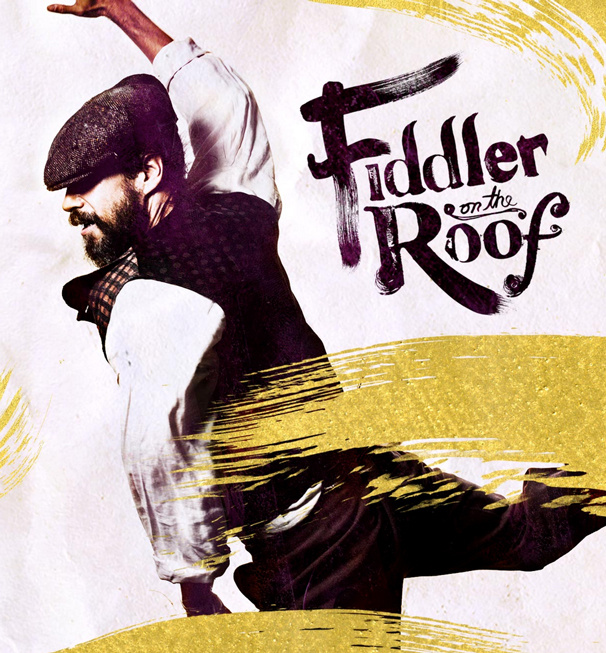
February is when I embarked upon my year of Shakespeare/theater project! And also when I saw what was arguably the best of the year's shows, Pericles at the Theatre for a New Audience in Brooklyn. (We've since gone back to that company for several other shows, all excellent. I'm basically sold on whatever they want to play for the rest of my NYC-area life.)
I also decided that I ought to become less bad at cooking in February, that cooking ought to be less painful a chore than cleaning the bathroom (totally wasn't). Immediately discovered that all my spices were expired, and dove headfirst into the world of fancy spices, taking my first trip to the wonderland that is
Kalustyan's! AND my anemia passed enough that I finally got to stop taking those
awful iron pills!!
We had a bizarre Ash Wednesday basketball game, but hey, there was something cool about a large portion of the audience still having our ashes, in fasting and abstinence while yet cheering on the team that we're committed to! The Pirates were good that season, too, which is very odd in my experience. :o
MARCH
In March I finally pulled myself out of credit card debt! Wow, that feels like so long ago! I'd expected to be stuck for another 6mos or so, thanks to ordinary things I just couldn't do back when I'd had no energy, but no! I pulled it off in March! That was pretty exciting.
Also went to my first bar crawl ever in March! Was whiskey-themed, for St Paddy's Day, with my aunt, at her suggestion. Wouldn't have it any other way! And let's not forget a delightful visit to my dear sister! It was a
pretty last-minute decision, as far as my decisions go, but an important
one, to bring me into her life as a college kid for a weekend, to take
me to all the important places and to see all the important people. It
was a delightful, restful weekend.
AND SETON HALL WON THE BIG EAST TOURNAMENT!!! Bummed out of March Madness in the first round (who even was that who showed up in our uniforms that day, definitely not the team I'd been watching all season), but it hadn't been so exciting to be a Hall fan in so long!
Ooo, Holy Week at my parish was cool, the first year with one set of liturgies for the two churches! I will never get sick of liturgical processions across the UES. March was a busy month for freelance work, too; I proofed a couple
friends' theses. Those are so much fun! The only way I read their works,
realistically, and they're saved the trouble of detailing their
footnotes &etc. Win-win. It's actually too bad I have no more
friends in grad school who wouldn't do it all themselves. :(
APRIL
April began with the return of the now-traditional Bacon Friday party! An excellent beginning. The next day I introduced (read: accidentally set up) two friends from whom I maaaaay be expecting to see a ring within months.
I had a delightful visit to DC, catching up with old friends from various periods of my life and generally enjoying people! Notably, experienced my first Brazilian steakhouse, which was every bit as glorious as people have been telling me they are for over a decade. Also, I hadn't enjoyed whiskey and cigars that much in a very long while! Company and context both make the experience.
By April I was cooking all my meals regularly, about one new meal a week. More importantly, my energy had returned to about a normal level! This doesn't sound like much, but it'd been over two years, so it was friggin huge.
I was still doing too much freelance work in April, BUT that was interrupted by another truly standout play!
Death for Five Voices is a musical about medieval composer of liturgical polyphony Carlo Gesualdo... who, earlier in life, walked in on his wife and his best friend in flagrante and murders them brutally. So there was plenty of drama already present in the story! It was well acted, well directed, well written, etc., but more importantly to me, the music was a stunning synthesis of the principles of musical theater and the principles of vocal polyphony. I'm still a little upset I can't buy a cast recording. It was just exquisite!
I also voted in the Republican primary, which, as I sadly expected, was in many ways more important than the actual election, sigh. But happier topics: I finished
Michael J Sullivan's
Riyria Revelations in April -- yet another living authors whose books I will now buy without question or hesitation! This series is a fantasy epic starring an unlikely pair (thief/former assassin and soldier-with-a-heart-of-gold who take on impossible-seeming odd jobs), and I just can't praise them highly enough!
MAY
Heh, May featured the worst play of the year! It was a good idea, playwright/director, to pit Sherlock Holmes, Britain's best fictional detective, against Arsène Lupin, France's greatest gentleman thief! But you focused on the trappings (and on having your American actors put on bad, inconsistent, hard-to-understand accents) and completely lost sight of what is essentially excellent about each character. It was wise of you to run the play straight through, without intermission, because even I might not have come back...
By May I was thoroughly enjoying cooking! I took to it a LOT better than I'd ever expected! A new recipe or two each week, most of which were at least moderately successful.
A lot of good family time in May, including a fun road trip for my sister's graduation. Embarrassing moment: for the first time in my life, I completely forgot to pack underwear for a trip! :o At least it took almost 30yrs for that one. PTL for a convenient Target... But really, it was a lovely weekend, all the things a graduation weekend should be, I think. (With some stresses that have faded with time.)
JUNE
June ties with April for most theater -- 5 shows in each month! (This is why I say I've slowed down to two shows per month.) Including the first Shakespeare in the Park, which was just a ton of fun no matter how you slice it. Even waiting in line was just hours of playing games with friends! (Even if the show itself was the most uncomfortable Shakespeare has ever made me feel as a woman, to be thankfully contrasted with Lear in December.)
I lost weight in June! Completely unintentionally, I assure you, but hey, always a nice surprise! Only maybe 1/5 of what I gained from the mono, but whatever, it's still a good sign. This, too, was an excuse to buy more dresses (an excuse I never need!). I own a LOT of dresses, you guys!
And how could a forget a friggin great family wedding in June!! One of the cousins we never expected to marry, certainly not young, married a gal that we like way more than him (although we do like him, after all). Turns out, her family is Israeli Jewish (whereas I'd presumed they were NY Jewish), giving the wedding and reception a completely different character from what I'd expected! But an enormously fun one to me who loves to dance. And who doesn't love family shots? (I mean, plenty of people don't, but they're rare enough, and like 80% of the shots I've ever taken have been with family, so I find it fun, whatever.) It was a wonderful, wonderful event.
JULY
I let peer pressure get to me in July, and thus I survived my first ever camping trip! It wasn't so bad, actually. I mean, the bad parts were pretty miserable, but the whole "completely off the clock for days at a time" thing was great, as was the "s'mores every evening" thing. I am a sucker for fresh s'mores. Also good company and random sing-alongs. Basically, it was pretty great, and I'd do it again next year (but probably not more than annually).
And then came the WONC! Best vacation ever, with most of my favorite people! All those college friends who live far away but I'd be heartbroken if their kids didn't know me, those are the ones who come on this ever-2-or-3-years vacation, and it's just the best thing. This year the 7yo girl asked the 6yo boy if she could hold his hand, and then didn't let go of it for like a day and a half. The next day, he picked her some wildflowers! I'm basically hoping we get a first kiss on one of these vacations in the future; I don't even care whose kids it's between. It just feels so delightfully conspiratorial! But yeah, just a wonderful week relaxing where we can basically all take for granted an incredibly deep knowledge of one another. It's just beautiful.
A delightfully liberating realization I came to on the WONC: Never in my adult life have I cared less about being unmarried with no prospects! Probably this is a consequence of having been sick for so long; I simply have no fucks left to give about all the things a gal is "supposed to" do according to some people. I've tried most of them at various times, and they didn't work. If God wants to put somebody in my life, He's gonna have to work at it (or else the guy is). I'm gonna focus on other things, like feeding myself and making my apartment less of a giant mess.
Bible study started back up in July, too! Spiritual works of mercy, man. I thought I knew them! Not really, though. Turns out, the whole shtick on these works of mercy is that you act not for your own needs or desires in the moment but for the genuine needs of the person in front of you, who knew? But after 7wks of reflecting on that, I feel like I'm finally beginning to have a sense of what it means to admonish the sinner, you know? to instruct the ignorant. It was just lovely. Huge turnout, too, almost too big for conversation! Good problem to have, but still.
And I capped off July by visiting my sister again! Charlotte's a great city, and her bunny is basically the greatest, smartest, softest pet ever (in my COMPLETELY unbiased opinion). Oh, also she's great and so is her boyfriend. I miss the bun, though.
AUGUST
Wow, a year is a long time! How do we still have so much left? Wow. I feel like things slowed down in August, though. Some cooking, some theater, some friend time... We tried to wean me off the antidepressants, then laughed and put me right back on the low dose, that happened in August. I think it's around this point when I began to realize that, while I have been feeling a thousand times more like myself, there still are some things to get to the bottom of, such as feeling anxious or low far more than before I got sick, and frequent headaches...
Oh! That's a thing I did in August! I embarked on a long overdue project of cooking the liturgical year, starting with an Algerian lentil soup for Monica and Augustine (did you know Hippo is in modern Algeria?). That was fun while it lasted (spoiler: kinda forgot about it after a couple months).
I also
finally dug out the last of the mess in my apartment that was left in piles from the worst of my mono days! It takes many months to recover from 2yrs of not putting
anything away because you just can't, and I really wanted to hit my 30th birthday with that clutter out of the way physically so that it could be out of the way psychologically.
SEPTEMBER
In September I turned 30, woooooooooooooo! I was really looking forward to it, partly because it was a great excuse to throw TWO (back-to-back) really great parties, one in the city and one at my folks' place in Jersey, which a lot of people came to, but also I think because I've been feeling "old" for several years now, and that number changing gives me permission to express that without sounding
completely obnoxious. But really, those parties were just delightful! I felt like I got to visit with everyone just a bit, and so many came!
Also in September, my first Improv Everywhere event! Their
MP3 Experiment, which was delightful and which I very much hope to do again! If you watch the video, you can see me, red wig over face, in a gray dinosaur tshirt, just shy of 6m in.
I think it was in September that I tried to join the parish choir, but it just wasn't working, schedule-wise (very, very clearly). So sad! Trying to join and failing made me miss being in a choir even more than being out of a choir for
almost three years already had.
OCTOBER
Apparently it's not normal, when one stains an article of clothing, to think, "Aww, man! I guess the only thing for it is to tie-dye this," but that was the natural thought process to me! So in October I had a sleepover with my aunt, my dad's only sister, for the purpose of tie-dying my black-with-white-flowers(-and-pockets) dress. It was a lovely, relaxing visit of the kind one rarely gets as adults (because who can manage to carve out two whole days for visiting just one or two family members?). AND the dress looks glorious! Everyone thinks it came off the rack like that, and was a great find to begin with. Hehe!
I also had enormously too much fun with my Halloween costume! I wasn't able to come up with anything creative, so I recycled the carnival-gypsy idea of my childhood (although with fewer layers than when I did this in Chicago, because I'd've sweated through them all). The genius this time, though, was finding jewels to bedazzle my face with AND adding temporary tattoos! Especially tattooing my face. I maaaaaay have overdone it on the face tats...
I cooked a lot of things in October, according to my records. Which is kind of funny, because October is also when I gave myself my first second-degree burns (turns out, tossing a chunk of stew meat
into a puddle of hot oil wasn't my brightest plan)! My poor pharmacist friend got a lot of texts from me that month...
NOVEMBER
I'm glad we started this month with a day pilgrimage to the Divine
Mercy shrine in western Mass., because oh boy do we need it! The convert
friend I went with had never been on a pilgrimage before! Which seems
crazy to me, but really, had I ever been on a pilgrimage (besides the
March for Life) before Steubenville? No, of course I hadn't. Whatever. Regardless, prayers and sacraments and a holy place and edifying conversation and surprise vespers with the brothers... It was good. :)
Perhaps November is when my interest in cooking waned? It doesn't appear that I cooked a single new dish all month, wow. I mean, November was an odd month emotionally. Not that Clinton winning the election would have been sunshine and roses, but Trump winning was a helluva gut punch, and one I was very unprepared for. I had just observed a week prior that every time I thought this election season had hit rock bottom, it proved me wrong, and here it went again! For most elections, the most painful parts end when the uncertainty/possibilities are gone, but nope! This only got worse. And I was lucky! Nobody on my feeds was vindictive or angry. But I am attracted to other people's pain; I absorb it, learn from it, pray for it, empathize with it. And so facebook became a toxic place for me, which made me sad.
But on Christ the King Sunday at Mass I was struck with an idea (as one often is at Mass, or is that just me?), and once Mass ended I hurriedly started jotting down ideas... A month and a half later, I confidently assess this idea as genuinely from God, based on the fruit it's borne. Each day, I've asked facebook a silly/ridiculous/unimportant question, just to get people talking about things other than their fears, their angers, the ways they feel hurt by "the other side." On slow days, I've gotten only 20 replies; some days I've gotten over 70! And I can't tell you how many people have privately thanked me for doing these (so I'm not sure I'm ever allowed to stop haha). It's really been a gift, though, and I'm so grateful for this way that God is permitting me to encounter other people.
DECEMBER
December began with a day spent with my "aunt" and "cousins" -- you know, not related, but absolutely grew up together, still send them Christmas presents, etc. Extended family despite not technically being family. Well, the one cousin I hadn't seen in, I dunno, 8 years? It just felt like a lovely reunion, seeing them all together after
so long. Small but sweet.
Family has been in closer touch than usual this December, a consequence of my grandmother's impressive car accident of the beginning of the month. She'll make a full recovery eventually, but in the meantime, she's got a lot of casts and braces for the nurses to attend to, and we're making sure she gets multiple visits and phone calls daily, which is a lot to coordinate. Everyone's good about it, though, which is wonderful. I am so grateful for my family, on both sides!
Sad to say, my happy run has ended, and after over a year scot-free, I've again been afflicted with a crush! It boggles the mind how much of one's brain/time can be taken up by repetitions of the same imaginary future conversations with the same boy, especially in a case like this where I think we'd be a poor match long-term but simply desire his friendship. I mean, it's bearing positive fruit, because he's pious as all get-out, but...
Happier news! I've also had more caroling this December than any Advent since, I dunno, high school? Just a lot of parties with caroling. It's been delightful! AND I finally went to the Messiah Sing-In at Lincoln Center. Basically, the more I sing, the more I crave more singing, so it's great that 2017 has a lovely Catholic chorale for me to join!
The theater has continued to please, and while this month's whitewashed Mikado feels like it was (almost) redeemed by April's excellent King and I, June's good-but-weird Shrew was redeemed by December's genderbent King Lear! I never realized what a naturally feminist play it is, just because the storyline is so much about Lear's daughters! Wonderful show, fun to know people involved, just excellent.
OVERALL FRUSTRATION
I cannot handle people's inability to communicate across ideological/experiential differences! How is it that we can't even hear each other? We not only fail to correctly assess what's important to "the other side" but we diminish them often to the point of depersonalizing them. True, they don't see our points, the things that are important to us. That doesn't mean we should be as bad and ignore their points! Oy.
Would it kill the left to consider that MAYBE not everyone who voted for Trump is racist? That maybe there were other issues at play, and some people weighed his bigotry with other things and it came out to be a lesser problem for them?
Would it kill the right to admit that HEY, hate crimes have gone up in the weeks since Trump's election? That maybe there ARE people who are happy for the opportunity to dehumanize and harm others for reasons of bigotry? That perhaps the reason why some people are whining loudly about their concerns is because they tried speaking softly and no one listened?
BUT SOME OPTIMISM
That being said, human beings have seemed interested in encountering one another, in moving forward, sometimes even in building bridges. And hey, those of us who are scared about Trump's presidency? We should have extra opportunities for service and advocacy! #worksofmercy
But seriously, people are wonderful, and my life has been full of great people. Family, friends near and far, ministry people, even co-workers! Not to mention the many humans I know from the internets. No matter what happens in a given time period, no matter how shitty a year may seem, it's still full of graces and blessings.
To anyone who actually made it this far, kudos to you! I really wrote this for myself, but hey, that's what the internet's for, right? I know this would be more interesting if I went back and added photos, but let's be honest, I've already spent 3h on this, so, pass. :)