Sunday, July 29, 2012

On the Heartache Inherent to the Pursuit of Pleasure Alone

I just finished Melinda Selmys' excellent book Sexual Authenticity: An Intimate Reflection on Homosexuality and Catholicism. It's part autobiography, part bridge between gay culture and Catholic culture, helping both to understand the other. I cannot recommend it highly enough.

Selmys makes it clear that beauty and truth are driving forces in her life, and these show clearly in her writing. One passage in particular has stayed with my memory: so hauntingly true, so plaintively evocative...

          Do you think that you know, better than someone who is trying the path of flesh, that its promises are void? That you know better that it is all heartache and failed romance? That you have a keen insight into its existential abysses, lacked by those actually drowning in the darkness?
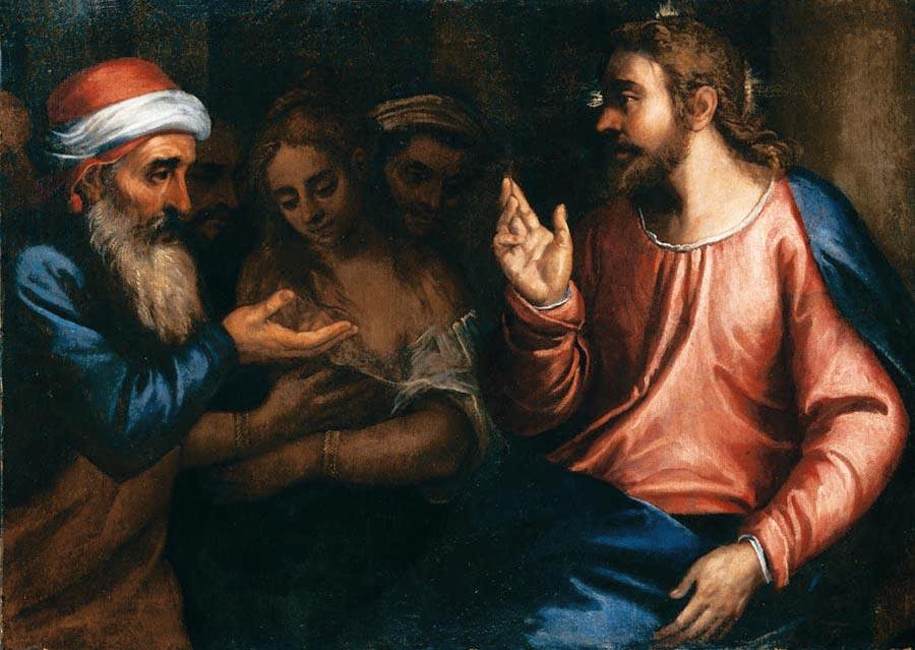
          We needn't squander too much time demonstrating that there is no hope for man in the satisfaction of his impulses and desires. Those who pursue Lady Pleasure as their mistress will find out, sooner or later, that she is a ruthless goddess, a consumer of hearts, who feasts on the carcasses of her faithful and leaves their bones to the dogs. Those who are involved in sexual excesses of any variety -- heterosexual, homosexual, or other -- will eventually discover that they are held hostage in the prisons of their own desires, and that what looks like freedom tastes like death. People who languish in the dungeons of sin know. They know. They are only trying to tell themselves otherwise as a means of keeping sane -- much as a certain kind of prisoner, confined in chains and kept for years from the light of the sun, will slide into a deep and imperturbable fantasy in which the bedbugs do not bite and the whip does not crack. If you feel compelled to rattle someone into a realization that they are sauntering down the wide avenues to hell, concentrate on the complacent, the respectable, the self-satisfied. The sinners -- the public, obvious sinners, the prostitutes, the tax collectors, and the men on Queen Street with the leather thongs -- they know. Christ was always very tender with these people. He saved the epithets and violence for the Pharisees and the moneychangers in the Temple.

Andrea Vincentino, Christ and the Adulteress
Credit: Web Gallery of Art

May we all be a bit more tender with the manifest sinners in our lives. May our love for them draw them to Christ, Who is the only source of healing from the sores left by Lady Pleasure's reign. And may we each embrace His love and forgiveness, and welcome Him to heal the wounds of our own sins.

Propitius esto, parce nobis, Domine.
Propitius esto, exaudi nos, Domine.

Thursday, February 9, 2012

On Thinking Outside the Box and Seeking the Unanswered Questions

So one of my penances for Septuagesima and Lent is that I'm reading Abp Bugnini's thousand-page tome about the postconciliar reform of the liturgy. I'm keeping a pencil and a notebook next to the volume and jotting down questions as they occur to me. The very first one:


But whence came the idea of revision by committee?

At the beginning of Archbishop Bugnini's narrative, Pope Pius XII gathered a handful of scholars into a committee that seemed to be aimed at exploring the possibility of future liturgical reform, clearly suggesting that this idea was not new as of the postconciliar era.

Now, my study into the process of reforming the liturgy has only just begun; there are many histories left for me to read. Perhaps Alcuin Reid addressed the genesis of the "revision by committee" idea in the 20th century in The Organic Development of the Roman Liturgy, and I missed it in my targeted thesis-related skimming (or perhaps he do so will in his sequel Continuity or Rupture?, rumored to be released in 2013).

Too, previous liturgical reforms, minor though they admittedly were, have left us much sparser records. I would love to compare in what manner the various popes who've made liturgical revisions through the centuries leaned on the respective experts at hand. Alas! There is little hope of such comparisons. Earlier centuries were not so concerned with recording every confessional detail for the edification of future generations.

Now that I'm a whopping 8% of the way through the book, I realize that not one scholar or bishop presented in the narrative for my consideration seems to have ever asked himself my question above. It's simply taken for granted that this method of revision by many committees is good, because it avoids the errors of revision by one person, and the work moves forward.
This oversight reminds me directly of my complaint with most liturgical catechetical resources in the field today. Books like Fr Paul Turner's popular Understanding the Revised Mass Texts are full of solid theology and good praxis, but take for granted that the reader knows and appreciates why his presence at Mass is important. The vast majority of resources out there never address what seems to me the central question: Why should I bother to go to Mass anyway?

We can do great things for the spirituality of all the faithful by helping the liturgy to look and sound more beautiful, by teaching people when they're supposed to do and say what, and why. But we cannot afford to lose sight of the important questions, the questions no one seems to be asking.

In the current case, it's our bored teenagers who've got the missing question. In the 60s? I don't know. The more I learn about the 60s, the less I understand them (recommendations of a readable history on the 60s welcomed in the combox). Those who voiced opposition to the reforms were perceived as stuck in the past - as sometimes they truly were (as par. 7 here). But it seems to me that finding this answer, discovering where the idea of reform by committee originated, may reveal where the floodgates flew open and allowed for reform that is so easily perceived as a rupture with our liturgical tradition.

The Church, in the promulgation of her liturgical books, is indeed infallible, or at the very least highly trustworthy. The reformed books of the Roman Rite are unquestionably valid, and I do think that future reform must begin with them. However, the actions of her individual members are not so objectively defensible, and a careful examination can be helpful. Unfortunately, it seems that my question will not be answered in this book, so I will have to tuck it away in my brain and keep seeking.

It's going to be an interesting Lent. You may be hearing from me more frequently...

Qui mysteria abscondis prudentibus et sapientibus et revelas ea parvulis, miserere nobis.

Sunday, November 6, 2011

Apologia pro "Patre"

Many of you have probably observed that priests don't usually call each other “Father,” but rather simply by their first names – as seems perfectly appropriate to their brotherhood. What is less easy to observe is that this same practice has become commonplace among laity, in settings where the ratio of priests to laypeople is fairly high.

So these last two years of living at a seminary among priest classmates, and now my brief time working at a chancery, have shown me that I am in the vast minority, to piously insist on calling priests “Father.”

Thus, with no judgment implied on those whose practice is otherwise, I humbly undertake to explain to a generic priest just why it is that his title is so much more important, in practice, than Doctor or Judge or even Mister.


Why do I call you Father?

It's not out of respect, though I do respect you. You have sacrificed much to serve others, to serve me, and I do appreciate it, but that is not why I call you Father.

It's not in deference to your education. To be frank: In most cases, I am equally educated, or at least darn close. I have equal facility in general philosophical and theological fields and more knowledge in specialized liturgical ones. When you do know more, I have for you the respect of a scholar, not of a priest.

It's not because you're better than I am, or of a higher spiritual class. True, your vocation is supernatural to my natural one, but we are both children of God, merely different parts of the body. No, it is not out of self-debasement that I call you Father.

It's not because I think a friendship or working relationship between us would be impossible or inappropriate. I work with priests nearly every day. Too, I know so many priests who are yet dear friends. Just because he calls me by name and I call him Father does not bespeak an inequality that prevents communication or authenticity.

It's not because you've been a priest the entire time I've known you. Of course, sometimes this is the case, but so many of you I have been privileged to know during your seminary days or even before, and I am only the more careful to call you Father.

It's not because you're holy, although certainly you ought to be. But you're subject to at least as much temptation as the rest of us. When I learn of (or observe) your sins, it does hurt more than do the sins of others. But even if you were to be caught in public scandal, I would still call you Father.

No. The reason I call you Father is much greater than all that.

I call you Father because Our Lord Jesus Christ has configured your soul to His own, has transformed you into Himself in a particular way. You remain the man you've always been, and yet become Jesus Christ in the flesh. His presence may be hidden in you, just as His divinity was hidden on the Cross, but appearances matter differently in this world of sacraments and symbols.

I call you Father to remind myself of Jesus' great gifts to us, continually poured out in the sacraments. I call you Father to thank you for humbling yourself and putting on the person of Christ. I call you Father because it is your very identity to be Christ embodied in the 21st century.

So the next time I call you Father, recognize that it's not merely a polite greeting. It's a thank you for your vocation; it's an encouragement to be holy as He is holy; it's a recognition that your presence manifests His glory.

Thank you, Father. 


That You would deign to maintain the whole priestly order in holy religion, We beseech You, hear us.
That You would deign to provide Your people with pastors after Your own heart, We beseech You, hear us.
That You would deign to fill them with the spirit of Your priesthood, We beseech You, hear us.

Monday, October 31, 2011

Hymn for Vespers of CTK, EF

This hymn is not from the Mundelein Psalter, surprisingly enough. Yesterday (for the first time alone) I prayed the Office from a 1965 breviary, which did soooooooooo much to help the personal spirituality frustration about the divergence of calendars! It's translated as prose, but that doesn't make the hymn any less lovely:

We acknowlege You, Christ, to be Lord of the ages, King of the nations and only master of man's soul and heart.

The wicked mom screams out, "We don't want Christ as king," while we, with shouts of joy, hail You as the world's supreme King.

Christ, peace-bringing Prince, subject rebellious souls to Your rule, and in Your love lead back to the one fold those that have strayed from it.

For this, with arms outstretched, You hung, bleeding, on the Cross, and the cruel spear that pierced You, showed man a heart burning with love.

For this, You are hidden on our altars under the form of bread and wine, and pour out on Your children from Your pierced side the grace of salvation.

May the rulers of the world publicly honor and extol You; may teachers and judges reverence You, may the laws express Your order and the arts reflect Your beauty.

May kings find renown in their submission and dedication to You. Bring under Your gentle rule our country and our homes.

Glory be to You, Jesus, supreme over all secular authorities; and glory be to the Father and the loving Spirit, through endless ages. Amen.


Wednesday, October 26, 2011

Book Review (sort of): The Ottaviani Intervention

Long before I ever conceived of entering graduate studies in liturgy, there was a small study group in college. Among the first important names that came up during this study group was The Ottaviani Intervention. This essay, it was explained to us, was written and sponsored by some cardinals shortly after the Council, and it really iterated all the major things that were “wrong” about the novus ordo, those elements that were dramatically changed to the detriment of the Catholic faith – an example being the mention of the Parousia, of Christ's Second Coming, in the embolism of the Our Father, thereby speaking of the future presence of Christ after He had just been made present in the Sacrament of the Altar.
After obtaining the book at a used theology book sale, it was with heavy heart and high expectations that I opened it to read this groundbreaking report.


Maybe my senses have been dulled by the “multicultural” liturgy that was forced upon me at the FDLC conference last week, but the Ottaviani Intervention didn't shock me. In fact, I thought its authors were overreacting in quite a number of places. I must be less traditional than I'd thought.

Some of the accusations that didn't surprise me were probably very potent ones in their day, but have lost much of their fire through repetition. I really don't get excited anymore that the notion of sacrifice was completely excised from the offertory rite. The special effects in Star Wars (the original trilogy, of course!) were groundbreaking in their day, but when I watch them now, they're old hat at best. Doesn't make them less true, but explains my lack of response.

Other issues that I dismissed have been nuanced over time and corrected with translation. We are on the third typical edition of the Missal of Paul VI (i.e., it's been revised twice since 1969).

There was some hair-splitting and stretching, of course. Apparently, by having the priest say, “Do this in memory of me” rather than “As often as ye shall do these things, in memory of me shall ye do them,” the Church has caused people to lose focus on the sacramental action being re-presented, and instead think of the Eucharist as a commemoration. I understand that it's a big deal to change any text in the canon, but this comes from the very next verse in Scripture and means so nearly the same thing...

Then there are the overstatements. Most of these had to do with the novus ordo being Protestant in theology. As much as I am usually wildly entertained by inflammatory statements about Protestants made by Catholics trying to preserve Catholic identity (favorite: Ralph Adams Cram!), the statements in the Ottaviani Intervention – in addition to being vaguer and much less witty – just strike me as untrue, at least judging by today's variety of Protestants.

But the reaction that surprised me most was when I thought, “Oh. Well, that assessment is true, but actually I think you're kind of wrong for caring.” Theological ideas I have always taken for granted – like the baptismal priesthood of the laity (different in kind from the ordained priesthood but present nonetheless) – were held up as examples of the crazy ideas promoted by this liturgical reform.

Too, I thought its authors were just as nearsightedly obsessed with sacrifice as modern whiny traditionalists. (Admittedly, both also acknowledge the doxological element, the need of glorifying the Triune God, so I suppose they're two-trick ponies.) I don't mean to suggest that sacrifice is not an absolutely essential element of the liturgy, especially the Eucharistic liturgy (although, in light of Ratzinger's statements in Spirit of the Liturgy, I can't help but ask what is meant by sacrifice, but that's a topic for another time). But where is their eschatology? What about the legitimate communal aspect of liturgy, which is of its very nature a communal act? What about the communicant's moment of intimacy with the God of all creation? Not to mention the liturgy's cosmic dimension? Yes, sacrifice is absolutely essential, but let's not be reductionist here, people.

It's been forty years since the novus ordo was promulgated. The Church is still standing. One can argue that she'd be in better shape now had the Mass never been reformed – but one could make just as strong an argument that she'd be in worse shape. At this point in time, despite the various traditionalist communities around the world, the piety of the vast majority of Catholics has been shaped and formed by the novus ordo. Certainly some of the theological trends preserved more strongly in the old liturgy are less clearly understood by many. But the world has not become Protestant. Catholicism is as virile as ever.

Is a book like this worth reading, for a scholar of the liturgy? Sure. It was a landmark book in its day: shocking, unusual, and insightful. Is it likely to be relevant to the average interested reader? Less so. If you're looking for traddy liturgical books, I'd still send you to the early 20th century long before I'd recommend Cardinal Ottaviani..

Thursday, October 20, 2011

On Martyrdom

“Would you be a martyr for the faith?”


Again and again I hear this question – often enough, in the homily for the memorial or feast of a martyr (or group of martyrs, like yesterday).


But martyrdom has really never struck me as all that difficult a thing. Sure, it would be sad to leave behind all those I love, and it'd be absolutely terrifying to effectively volunteer to be killed, but the alternative is committing apostasy in the most cowardly manner. Go big or go home, essentially, and with my disposition, it’s plain that I'd regret going home for the rest of my life. It'd be easy to die for Jesus.


So the focus shifts to white martyrdom, to the everyday things: swallowing your anger at that guy who just cut you off; treating that person who thinks you're an idiot just as kindly as you treat your best friend; doing your best to remain healthy yet accepting without complaint the inevitable decays of age. (I feel like I'd have better examples of this if I were a mother; feel free to chime in the combox, ladies!) I already strive for virtue in my everyday actions; the reminder is helpful, but not earth-shattering.


However, the everyday martyrdoms grow deeper still. The most striking thing, to me, about the story of Isaac Jogues, centers around his return to France after years of mission work in what is now the U.S. He was so deformed from the tortures he'd suffered that his brother Jesuits did not even recognize him! And yet, after a few years back at the monastery, he asked to go back. To return to the people who cut (or bit) off his fingers and marred his face, among so many other tortures! After all they'd done for him, he genuinely loved them, still wanted to bring Christ to them. And he did, until they martyred him.


Now that is a style of martyrdom I ought to work toward: deep, self-giving love for those who have given me only pain. That kind of love is indeed divine.


Iesu cuius corpus percutientibus, et genae vellentibus, dedisti, miserere nobis.

Iesu fortitude Martyrum, miserere nobis.

Wednesday, October 5, 2011

Important Things I Learned This Weekend

Absolutely nothing compares to the deep joy of reuniting with loved ones after months or years apart.


Wednesday, August 31, 2011

Reaction: Gone with the Wind

SPOILER ALERT - I am going to discuss the plot freely, presuming you have read the book &/or seen the movie. If this is not the case, and you don't want surprises spoiled, stop reading now.


I picked up Gone with the Wind at an estate sale a few weeks ago. I'd never seen the movie before, but had heard wildly positive recommendations, and it was $5. I didn't just start reading it; I started devouring it. I read from it every single night, even when my mom was visiting. For every day when I read 20pgs, there was another when I read 200pgs. I even found myself going about my normal day, and applying to my life advice given by one character to another. I LOVED reading that book, and I looked forward each night to returning to these beloved characters, often staying up far too late just to keep reading.

But toward the last few hundred pages, I began to fear that there wasn't space left for Mitchell to wrap things up nicely and return the book to its former glory. As I read, I felt only anxiety - some sadness, but mostly just anxiety, just a feeling that something wasn't right. The sort of feeling where you just expect things to get better... and then they just didn't. I didn't cry much (which is very unlike me). When I finished the book, I spent the next few hours in a daze. That's it? I found myself wondering again and again. That's really it? It just didn't seem like enough. I'd loved the book for the first thousand plus pages, but now... ?

She certainly stopped at a stopping point, with some issues resolved and others opened new. There was growth in some characters - certainly Ashley, and arguably Scarlett (though it's just as arguable that she didn't learn any lessons from her flashes of understanding). And Mitchell had to stop the book somewhere; for goodness' sake, it was already 1500 pages long! But I was still unsatisfied. Unsettled. I was not pleased with Ms. Mitchell, and I couldn't quite put my finger on why.

Until I found the lynchpin: Rhett. One of my favorite characters from the whole novel, and she just abandoned him, a mere shell of a man. Of course he doesn't love Scarlett; he has no feelings left! The death of his daughter, whom he loved more than life itself, compounded by his own guilt about it and years of unrequited love selflessly delivered? Of course he's not himself! Isn't it obvious that he's spiralling deeper and deeper into depression? And pushing Scarlett away is just another hopeless rejection of someone who might help him?

They say that one of the major themes of this book is survivors - some people can survive through anything, and others just kind of float through life. Certainly Rhett is a survivor type, as is Scarlett. But to our knowledge, he's never faced a tragedy like this before. Rhett can survive any external problem; he's shown that very clearly. But this is an internal problem, an emotional problem. Sure, Rhett can read other people's emotions clear as day. But does he know how to deal with his own? I fear not, and I'll never know. I fear that the Rhett I grew to love is gone forever, lost in grief - not as dramatically as Gerald had, but as completely - and just as after the death of a loved one with an illness, I will have to rewrite the recent memories over time and replace them with the old vibrant ones, which is always doable but sad.

And Scarlett, whose own chance at real love - that intense, surreal moment when she and Rhett loved only each other and knew it and wanted the other to know it - she sabotaged it by her fear, her need for control, and her consequent insistence on playing games with her beloved instead of being vulnerable and honest with him (admittedly, his fear and consequent games and lack of honesty helped much, too). And what does she do at the end but return to the very games she's played all her life? How does she cope but to do precisely the one thing Rhett most strongly refused: she plans to try and win him, just as she tried Ashley.

I know that happy endings can be imagined, particularly in light of his devotion to the children. And I did like the book, and would absolutely recommend it. I look forward to watching the movie. But I can't help but feel disappointed that Mitchell has left us in a place where all our most beloved characters are either dead, utterly desolate, or - in Scarlett's case - a damned fool.

Tuesday, August 23, 2011

On What Constitutes Good Liturgy

It's simple, really:


 "Good liturgy is when they're closer to Christ on the way out than they were when they walked in the door." -Msgr. Moroney (41:20)

Friday, August 19, 2011

On Jephthah, Listening, and Right Worship

Yesterday's first reading is one that I always find profoundly disturbing. I know that the Old Testament authors don't moralize, but merely present stories and consequences, forcing us to draw conclusions. It's been explained to me time and again that Jephthah made a stupid promise rather than asking God what He wanted. Yet this reading unsettles me every single time.


But Father glanced past a fascinating point yesterday, upon which I have dwelt ever since. Human sacrifice was not just a pagan practice - it was a pagan cultic practice. It wasn't just a thing Gentiles did; it was an integral part of how they worshipped their gods.

We see over and over throughout the Old Testamenthow  the people of God strayed from His commands and worshiped other gods. This is not just a tragic story of a great man making a stupid vow, and consequently sacrificing his only daughter. This is yet another story of the importance of worshipping God the way He has asked us to worship Him.

One can be successful, even winning great victories for God's people, and still worship Him in a horrifyingly wrong way. That makes the victories no less triumphant, the man no less well-intentioned. But how much less tragic our lives might be if we just followed the liturgical customs God has given us!

Dominum Deum tuum timebis, et ipsi servies ac per nomen illius iurabis.

Thursday, August 18, 2011

Things Liturgy School Didn't Prepare Me For, #1

After Mass, blowing out the altar candles at the wrong angle and getting wax splattered across the exposed skin on my collarbone.


Strangest configuration of first-degree burns ever!

Saturday, April 16, 2011

Vespers hymn for Palm Sunday

Tonight's Vespers hymn is the beautiful Vexilla regis:

Behold the standard of the King,
The Cross gleams forth its mystery;
On it the Son of God as Man
Atoned on earth for sinners all.

His side was pierced by cruel lance
That drew out water with his Blood,
To cleanse our souls from ev'ry stain,
And nourish them with its pure stream.

O Tree that shines with beauty rare,
Ennobled by Christ's precious Blood,
He chose you as the royal bed
To rest his sacred limbs in death.

O blessèd were your rugged arms,
From which the whole world's ransom hung,
You bore the weight of sacrifice
That snatched from greedy hell its prey.

Hail, holy altar, Victim hail,
For all the glory of that Cross,
By which Life chose and welcomed death,
And dying gave us life once more.

Hail, holy Cross, our only hope,
Wash all our guilt and crimes away,
Increase our grace while we adore
In honor of your victory.

Let ev'ry soul sing in your praise,
Salvation's Fount, O Trinity,
For ever cherish those redeemed
Through that great mystery, the Cross. Amen.

(Translation from the wonderful Mundelein Psalter.) A blessed Holy Week to you all!
Related Posts Plugin for WordPress, Blogger...