Showing posts with label tv/film. Show all posts

Wednesday, May 11, 2016

On Fiction, Perspective, and the Culture Wars

I've been thinking a lot lately about fiction, and how we process it.

A couple weeks ago, some friends and I went to see Fiddler on the Roof (absolutely phenomenal, btw). While chatting at intermission, I mocked myself, declaring that I should have counted how many times I cried in that first act. One friend replied, "I know, the wedding was so sad!" 
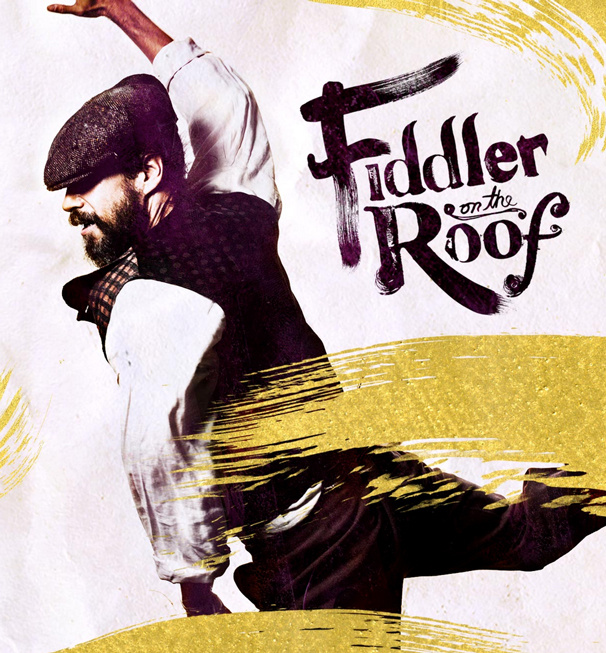

Oh. Yeah, didn't cry at the wedding, even though, yes, it was very sad. No, what made me tear up was every moment when someone took the risk of being vulnerable to tell someone they love something important, something that would be horrible if that person took it poorly. (And when someone listened to a loved one saying something difficult, good or bad.)

Watched Captain America: Civil War this week (barely spoilers ahead, only for the general conceit of the film). It was a fantastic movie, and I spent most of it not quite tense but distinctly uncomfortable, concerned--convinced--that one of these beloved characters would do something they'd regret and not be able to take back.

Discussed the movie with three friends. #1 discussed scenes, characters, legitimate concerns presented and imperfect ways they could have been dealt with, etc., with great nuance (as per usual). #2 was extremely annoyed at Tony, could conscience no reason whatsoever to be on Team Iron Man; obviously Cap was right, as always. #3 admittedly isn't a big fan of Cap, and found him completely unsympathetic because he went rogue and didn't try to compromise or communicate, didn't at all see that he didn't have the time or opportunity to do much of either.
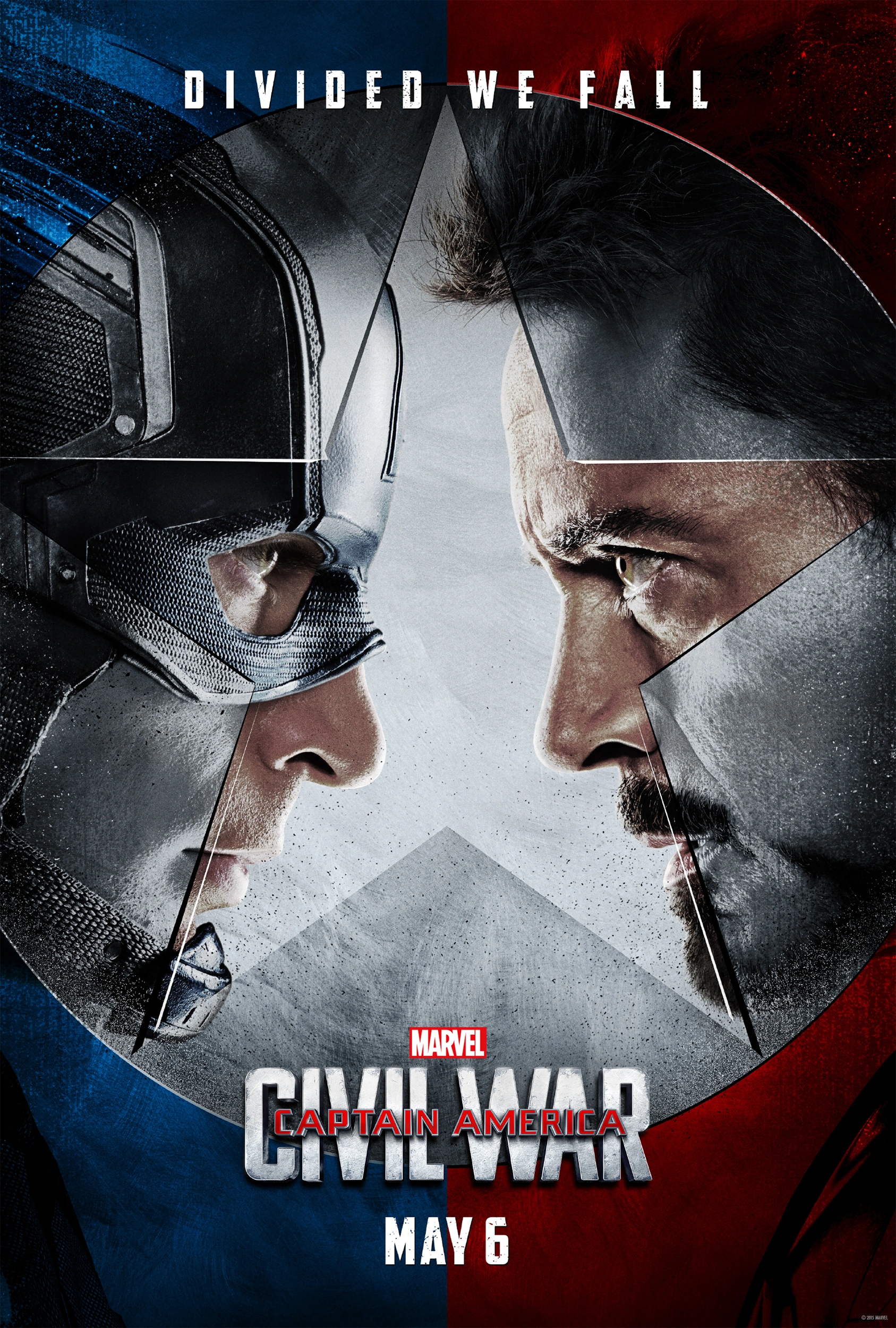


These latter two conversations have stayed with me, not because they impact how I think of these loved ones, but because they worry me. If we can't "see the other side" in a fictional problem, how can we possibly hope to navigate thorny real-life problems?

There's just about nothing in this world I hate more than the culture wars. They divide us so harshly, we don't even notice that we're demonizing (or at least patronizing) real people on the other side, people who may or may not have seen the same data, but who came to a different conclusion. We see agenda, we see malice, we see stupidity.

Yes, there is some agenda, some malice, some stupidity, always. But most of the time, the people "on the other side" are real people trying to fix legitimate problems, even if their proposed solution seems to cause more problems.

I should have some kind of conclusion here, but I don't. All I have are misgivings. Kyrie, eleison.

Thursday, December 27, 2012

Movie-Book Reviews - Spoilers Abound

Nota bene: Many spoilers below. Consider yourselves warned.

A fascinating opportunity is afforded us in this day and age: to watch a film adaptation of a book you've just read. Tonight was the third time in a month I've done this, and it's got my wheels turning...


First was Anna Karenina. Liz convinced me to read the book last winter, and while I didn't like it terribly much then, the more it's sunk into my brain, the more I've grown to like it. Brief summary: Contrasts four couples and shows the way infidelity destroys relationships from the inside out. First couple is unswervingly faithful. Husband of the second couple is a serial adulterer whose wife reluctantly forgives him the first time and turns a blind eye subsequent times. Third couple didn't marry for love (at least she didn't), and she becomes unfaithful, eventually leaving him. Fourth couple began in adultery and were never able to marry, and the fundamental insecurity this of this eats away at both of them from the inside, causing them to mistrust and hurt each other even while at the same moment they wish to be loving. All of this is most dramatically encapsulated in Anna herself, who, bearing the stresses caused by husband and lover, takes her own life, leaving each of the men who loved her alone to grieve. Anyway, excellent book. Great insights into human nature, and enjoyable to boot. (Well, except for the mini-essays on Tolstoy's political topic du livre, but that's just nineteenth-century Russian literature.)

The new film version with Kiera Knightly is almost certainly the most faithful film adaptation of a book that I have ever seen. I don't think a single line was added; certainly many things were omitted, but nothing that impacted the plot or characters in ways that the filmmakers were not able to convey visually. They did a fantastic job of portraying a whole character in a few shots of the camera (especially with Stiva!), and the stage conventions were used to great effect, I thought. I hear that it was difficult to follow if one didn't know the story coming into it, which I had suspected, but that's not necessarily a defect in the production so much as a different sort of art form, one that requires a different sort of preparation, much like Shakespeare's less obvious plays (i.e., basically everything that wasn't a comedy).


Next was The Hobbit! I didn't grow up on Tolkien like many of my friends from college and beyond, so I had a much milder review than some. Still, I read the book in high school, and reread the first third in the days before the show so as to be appropriately prepared. Since they had about as much time as the full Lord of the Rings Trilogy but only 300 pages to cover, as well as an incredibly dependable and clearly established fan base, I thought this might be an opportunity for the filmmakers to be meticulously faithful to the book. And indeed, the world of Middle Earth was fantastic as ever, and its characters wonderfully introduced.

However, important conversations were kept intact... except for an obviously missing line or two. Events were pulled out of sequence, dilemmas solved in ways that were close but markedly different (which often took no less time to tell), heroic moments created where dumb luck had originally sufficed, back story elaborated from other Tolkien source material. That last one I actually thought was a brilliant idea. Long review short: This film made me consider whether a film adaptation of a book really needed to be strictly faithful to its book.

But a conversation with a friend who grew up on Tolkien and has read The Hobbit dozens of times throughout his life reminded me: the tiny changes in the plot served to change the characters, to make them more glamorous, in a sense, more palatable to modern audiences. A treasure hunt wasn't good enough; instead an old villain was resurrected to persecute the travelers. Dumb luck wasn't sufficient to get them out of a jam; somebody needed to have the perfect solution in his pocket. I'm still feeling the tension of appealing to audiences and whatnot, but I can't help but wonder what would have happened had the filmmakers trusted the author a bit more... Still, I'll be glad to see the next two; I'll just come in with somewhat lowered expectations.


Finally, Les Misérables. Again, didn't grow up on this. Read an abridged version of the book in high school, but all I remember from that was the episode with the bishop and the candlesticks, and how impressed my classmates were by my French accent when we read aloud. And something vague about Javert chasing Valjean through Paris. Saw the musical a few years later, mere weeks before it closed on Broadway; likewise, I remember little except that the actor playing Jean Valjean has an impressively wide/high vocal range and incredible tone. I only learned this past October that a new film version was coming to theaters this month, so I bought an audiobook version from audible.com - whom I highly recommend, by the way, for their products, pricing, and customer service. Outstanding!

Am I glad I read the book! At times, the film lingered over a moment; other times, I saw chapters and chapters running through my memory during a single pan of the camera, understandably glossed over but enriching my outlook nonetheless. Some things were changed, it's true: Cosette was smarter and less oblivious; Marius was more decisive and also less oblivious; Eponine was much prettier; Javert more human; Thenardier somewhat less despicable. The ending was padded a bit, but it made for a nice closing number for the musical, and was a pleasant extension of the book's themes.

I don't know how they could have improved Gavroche; I wanted him to have more screen time, but that might just be because I enjoyed him so much. I did miss old man Gillenormand, though. He was present, but only in passing; though I knew there wouldn't be much of him, I did miss his spunk.

As I was reflecting on all this, though, I was struck by how noble every major character was (with exception of the Thenardiers), and how driven by passion of some sort or other: Marius may have rather floated along through life in some respects, but he lived driven first by reverence for his father's memory, then by his love for Cosette. Cosette was driven first by simple love for her father, then for Marius. Fantine was noble inside, despite what she had been reduced to; she did all for her little girl, she lived and died for Cosette. Jean Valjean began the story aimless, but soon lived for God, through the figure of the bishop; later, he lived for Cosette and her well-being. Javert lived for the law, and it wasn't until he saw that the law might not be the perfect arbiter of morality that he had always trusted -- until he was forced to doubt the perfection of the object of his passion -- that he wavered. Even the Thénardiers had a passion: money.


All of these reviews combined, I am left with a question: Why do I read these things, watch them? Why do I immerse myself in these stories? The point is not to judge how a movie lives up to the book that inspired it, tempting though that may at times be; the point is to lose myself for but a moment in a work of art, in a thing of beauty which reveals the transcendent, the truth of the human condition, God Himself.

Sure, there are external factors at work in every story: How might Anna and Vronsky's relationship have turned out if she could have filed for divorce without Karenin's permission? Certainly Levin and Kitty's love seemed strong, but how would it weather the years and their hardships? Perhaps Fontine could have made a wonderful little life for herself and Cosette in Montrueil sur Mer had society been set up such that having a child out of wedlock would not cost Fontine all potential friends and employers. If the government didn't imprison a man nineteen years for stealing a loaf of bread, then put him on eternal parole and deny him any chance at reform -- if petty theft did not transform a man, in society's eyes, into Cain: marked indelibly for his crime and identified primarily by it forever -- then what might Jean Valjean have become, without the incredible suffering that pushed him to such greatness?

But asking these questions is like second-guessing the events of our own lives. What if I'd applied for that promotion earlier? What if I'd gone to school elsewhere? What if I'd begun to work in a different field, lived in a different city? The what if's never stop, if we indulge them; but they are at least safer to make about the lives of fictional characters than about our own lives and those of our loved ones.

In the end, why do I read? To be transported to another life, to learn from another's experiences, to be enriched by another's loves. For hope, for the reminder that adversity can be overcome, even if it leaves a mark. Because there is truth in every story, and exposure to truth -- even if the same can't always be said about facts -- is always good. And just a little bit of because I can. :)

Cor Iesu, in quo sunt omnes thesauri sapientiae et scientiae, miserere nobis.

PS - I am particularly interested in movie reviews from those of you who grew up on the musical.

Thursday, June 18, 2009

On Traditionalists, Secret Meetings, and Being Spoiled

After a thoroughly enjoyable evening drinking homemade margaritas and watching Live Free and Die Hard at my friend's house (Casa Santa Ynes), the housemates went to bed and the visiting trads stayed up to talk.  What began as simple conversation quickly turned into a meeting of the minds of the LA traditionalists (all of whom, of course, belong to what I am led to believe is the only orthodox parish in the diocese), who intend to soon become formally recognized as a group, possibly a chapter of Juventutem.  The conversation and the company were both enjoyable, but I was reminded overwhelmingly of one thing:  I am so spoiled!

First off, I wasn't a trad before Summorum Pontificum, so I've never had to contend with being truly on the fringes of the Church, sometimes sharing that borderline with heretics; just about every trad I know has a fierce love for Rome and for Holy Mother Church.  Secondly, when I was in Steubenville, hard at work behind the scenes to bring the Traditional Latin Mass to Franciscan University, it was not because I was spiritually starving and had no place to go for the feast I so greatly desired; it was simply because I knew that it was for the greater good of the Church at large that the University, so known for her Catholicity, should embrace the holy father's desires for the Church (also because if Steubenville didn't adopt the TLM, many would take it as confirmation that charismatic and traditional are antithetical, which is clearly false).  But, again, it was not that no TLM was available; the Pittsburgh Latin Mass Community was only 45mins away, and there were always people to carpool with.  On top of which, when the work began to get really taxing, they brought Ryan in to officially do the traddy job I'd been unofficially doing (and so much more) - which left me to just relax and enjoy the ride!

Then, upon coming home to Jersey, I found a home (rather unexpectedly) at my local Institute of Christ the King parish.  Once the novelty of this place being a haven of the traditional way wore off, I began to see my parish as very much like a small country chapel: We have enough families to remain viable, but we're still a small parish, with a small building, and only so much in the way of means, so even the big feasts are done on a smaller scale, and more humbly.  But it's still so beautiful.

         A related point is that, because my parish is a bit of a hike, I attend daily Mass at various local novus ordo parishes.  But because I don't belong to those parish communities, I simply pray there the best I can without thought of how to effect change for the better, because that's simply not my place (and makes praying a whole lot more straightforward, too).

The final element that has spoiled me is my involvement in the Spirit and Truth young adult community.  Not only have these people been phenomenal friends and a necessary support system for my Christian journey, but the group is contemporary in setting, and charismatic insofar as its leaders' personal spiritualities.  Yet despite conditions that might seem averse to traditional liturgical practices, I've been privileged to witness a grassroots movement towards the very things I grew to love by immersing myself in traditional Liturgy.  And I haven't even tried to draw others there to tradition, even by prayer; I've just united my heart to God and been patient.

What I realized upon listening to these new trad friends talk is that I have been so spoiled!  By putting me in a ministerial position from which I could not complain freely to my friends, He taught me prudence of speech even among my friends (not that these trads are more guilty of novus ordo bashing than any other trads I know and love)!  By putting me under obedience to administrators who were more hesitant to embrace the traditions that have stolen my heart, He taught me patience (because look at the progress that's been made, and without making enemies in the process)! By drawing my non-trad friends unexpectedly toward things traditional, He taught me hope (and reinforced the patience).

But most importantly, He's taught me to trust.  I've learned by now the way He works in me, and I am thrilled that he's not calling me to be a mover and a shaker at present.  He's just calling me to step back and love (and perhaps to smooth the wrinkles that even well-meaning zeal can cause).

And I couldn't be happier.  Spoil me and call me to simply love others all You want, Lord.  It's one of my favorite ways to do Your Will.  :)

Wednesday, June 3, 2009

On Busy Weeks and Poor Self-Discipline

My sincerest apologies for the blog silence.  Last week, it was a poor balance of social life with blogging, but this week (so far) it's actually been a surprising excess of free time.  That, plus my sister hooked me on a terrible tv show with some hilariously nerdy writers!  And then I got sucked into the internet.

*Sighs* I really do have things to write.  I just need to sit down and /do/ it...

Tuesday, May 19, 2009

On Things that Just Don't Happen in Steubenville

I know, I opened a big can of worms there. Your mission, should you choose to accept it, is to fill the comments with other things that just don't happen in Steubenville (many of you would have done that unbidden).

Three times in the past week and a half, I've had three random encounters with strange men.

The first (in this set) was when I was walking across the street to my car after salsa dancing. I saw two gangstas crossing in the other direction and suspected... Sure enough, a few seconds later, I heard "Hey, how you doin, I'm 23 years old, I have my own apartment, I'm ready for you!"* I laughed as I got into my car and bid him and his buddies a "Good night!"

Several days later, I walked across the street from my bank to the parking lot in which my car was parked (to discover that I had indeed left my keys inside the car), but before I had a chance to call AAA, a man in an SUV pulled into the parking lot, told me he'd been struck by how beautiful I was, and what was my name, and did I have a boyfriend, and would I want to go to lunch with him sometime. I thanked him but declined, then sat on the trunk of my car as I waited for AAA to come and let me in.

So when the heavily-tattooed man in the pizzeria today remarked, "Looney Tunes, eh? But it doesn't have my favorite!" in response to the graphic on the chest of my tshirt, I was understandably a bit ill at ease. But he turned out to be just a sweet loner who likes conversation and sees nothing wrong with just striking up a conversation and talking to a willing audience for fifteen minutes until her food is ready and she can take it home to her family.

Perhaps it's nothing more than the bias of my experiences, but it seems to me that random conversations like this are at once more likely and more uncommon in more urban areas. More likely because the sheer number of strangers with which one comes in contact is increased astronomically, and that of necessity breeds comfortability with strangers. But also more uncommon because the average response to such stimuli seems often to be simply pulling back into oneself and one's established friends and not venturing out to meet whatever weirdo might be lurking around the corner.

Just some thoughts. I'm sure the deep philosophical stuff will come back. :)

PS - You'd better comment quickly. This message will self-destruct in thirty seconds.

*Punctuation is used here to denote his tone of voice and length of pauses, with no attempt at grammatical accuracy.

Tuesday, November 4, 2008

On Eowyn, and the role of women

Wow - it has been a long time. I do not intend to let this blog lapse for more than a couple of weeks at best. As much as this is fun and a release, it is also a discipline and a training I desire to enforce upon myself.

So I've been rereading the Lord of the Rings, and this week I've been very struck by the battle-part of Eowyn. I looked for some essays that address the role of women in Tolkien's epic work, but none of them address quite the nuances I'm looking for, so here I am, though I haven't yet finished the book (the siege of Gondor is nearing its end, I believe, but it is still going at the point where I last stopped reading).

Eowyn is a strong, powerful woman who has grown up in a society where strength and valor in battle are most valued. She has learned these things and learned them well, though warfare is a man's place, and swordplay a man's art. When the time comes and every man is needed at arms, she waits at home, dissatisfied with the governing noncombative role assigned to her. Still, she fills the role without complaint once. A second time she begs to leave, but remains behind to her duty. When all those she loves are about to leave her behind for a third time, where she knows a lesser man could do her work, she decides to throw convention to the wind and masquerade as a man, and she rides into battle with the all King's forces.

I see how this decision can be seen as selfish. She doesn't want to wait; she wants to be in on the action, but she also wants to give of herself in the valuable, valiant way she knows she can do.

But in the throes of battle is when it gets difficult - for as she remains near to her beloved uncle-king, it is not only her bravery but her unique position of femininity upon the fields of battle that allows her (with the help of Merry, who also was supposed to be far from this battle) to slay the King of the Nazgul, and to protect her Uncle Theoden King from a most ignominious moment of death. (Ignominious may not be the best adjective to use there, but it's what I've got.) Even Merry's part in the small yet great triumph of this moment is inspired by Eowyn - Merry's spirit is roused to valor by the great deeds of the beautiful woman before him, and he rushes to aid her in whatever small way he can (and it turns out that his blade, because of its history, does more damage to the fiend than could have any other on the field of battle).

Her brother Eomer and his knights rue the sight of fair Eowyn lying as slain upon the field of battle - but how much of their pain and outrage is because they think she is dead? How much will their minds and hearts change when they learn of her great works upon the battlefield?

I shall have to revisit this subject once I've read farther. I see now that my reading is incomplete to make a true judgment. Still, I do hope for intelligent responses from you folks in the comments. I am sure that, despite my attempt at being objective, I have projected quite a lot of myself into Eowyn. And I do wonder about her embracement of the masculine battle role with the glad proclamation of her womanhood that enables her victory once there.

Why does she fight? I'm sure there are a thousand reasons (Tolkien's characters are nothing if not well-fleshed out). To impress Aragorn? As an extra guard upon her uncle the king? To prove to herself that she is worthwhile, after all? To put to good use these skills she's been taught since her youth? To fit in with the men she loves by partaking of the same activity? To give what truly is her all in this desperate war that requires everything of everyone?

I don't know. Please, talk to me - about the morality of Eowyn's actions as regards her role as woman of Rohan.

UPDATE: 11/5, 10:14am
Now I've read a bit further, and can reflect upon Gandalf's comments as Aragorn comes to heal Eowyn in the Houses of Healing. He seems to suggest that the heavy weight of darkness brought to the royal house by Wormtongue has helped to poison for her the role of staying behind and holding down the proverbial fort. Still, he greatly honors her valor, and says that it owes her a place of honor among the great queens. Hmm.

Thursday, September 11, 2008

On Screens and Boxes

It's amazing how sitting in one place in front of a screen for eight hours a day makes one so tired!

I've been working temporary jobs (mostly just when someone needs a fill-in receptionist or whatever for an afternoon or a few days), and the workload's been low as of late. But this week I've been working full-time, and on Tuesday I noticed this pattern that I'd fallen into:
  • 8am-5pm: at work, surfing the 'net and answering the phones (save half an hour's lunch break)
  • 5-5:20pm: driving home
  • 5:20-7pm: watching TV with my sister
  • 6:15-6:45pm: eating while watching TV
  • 7-10:30pm: sitting in my room, on the computer
  • 10:30pm: start getting ready for bed and for work tomorrow
I compare this experience with other working friends and find that they're in the same predicament. Why is it that we are so drawn to technology, to machines that engage our brains (and maybe our fingers) but little else? Why is it so difficult, in today's fast-food / instant-communication society, to be disconnected? Why must I fight the feeling that it's essential to have read through all the latest news articles and blog posts before I can tackle cleaning my room? Is something disastrous going to happen if, at any moment, I'm not fully aware of the far-reaching implications of the latest insult Sen. Obama has leveled at Gov. Palin?

Of course not. But being aware of the goings-on of the world, and even simply being in constant communication with one's friends and peers, give one a sense of intellectual power and unity of purpose. Even having watched the latest episode of American Idol gives one a strong sense of solidarity with the rest of the nation.


Maybe it's just because my generation is so comfortable on computers that we look to them for refuge even when we're seeking refuge from too much time spent on computers. Maybe it's also connected to the vast reaches of the internet. I'm reminded of one bullet-point from the fantastic Evil Overlord List:
Finally, to keep my subjects permanently locked in a mindless trance, I will provide each of them with free unlimited Internet access.
That does sound something like working as a receptionist, except that I have the interruptions of the occasional phone call or doorbell.

None of my jobs were ever fancy enough to give me
a headset, but this gives the general idea.
And as for the TV, I'm reminded of a scene from Stargate: Atlantis in which two men from earth (Sheppard and McKay), are discussing with two crew members who are not from earth (Ronon and Teyla) what their respective peoples do for entertainment. For sake of clarity, earthmen are blue and aliens are green.
Ronon Dex: So people just sit and watch this box for hours at a time?
Maj. John Sheppard: Yeah, people do.
Teyla Emmagon: Is it that engaging?
Sheppard: Depends what's on it. There are lots of programs on dozens of channels, every day, all day.
Dr. Rodney McKay: Most of which are fictional representations of ridiculously attractive people in absurd situations
Sheppard: There are educational programs, all sorts of documentaries. Not many people watch 'em but, uh, well, they're on.
Ronon: And that's what everybody on your planet does for entertainment? Watch a box?
Well... Kind of. Humbling, isn't it? Makes me want to stop in at the health club on the way home fromwork and go for a run on the machines. I know, that still has me inside an air-conditioned building using a machine, but it's progress. Baby steps.

Related Posts Plugin for WordPress, Blogger...